




Drug use across the border!
Drug consumption along Mexico’s northern border have led to a binational crisis.
Tijuana, Mexico, May 16 (EFE).-
Fentanyl trafficking and consumption along Mexico’s northern border have led to a binational crisis, revealing not only the flow of drugs into the United States but also the displacement of US drug users to cities like Tijuana due to lower costs and greater accessibility.

As of Saturday, Alfonso Chávez, coordinator of the Prevencasa AC program, explained to EFE that the northern border concentrates specific problems of injectable drug and opioid use, which are distinct from the national panorama. According to surveys, methamphetamine is the main substance consumed in Mexico.
The activist also warned that centralizing public policies and failing to develop differentiated strategies for this region would minimize a phenomenon with its own characteristics.

Chávez noted that the US registers over 70,000 opioid-related deaths annually, a figure he says is key to understanding the severity of the problem in a region where people regularly cross between the two countries.
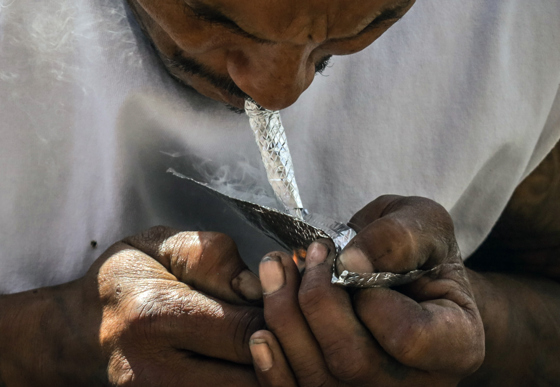
He underlined that Prevencasa staff have assisted multiple people who have overdosed after crossing from the US, including not only deportees but also citizens who regularly travel between cities like San Diego and Tijuana.

Lower costs in Tijuana
According to the coordinator, the dynamic is partly due to economic factors and access, as some Americans are drawn to Tijuana by lower housing and food costs and easier access to substances.
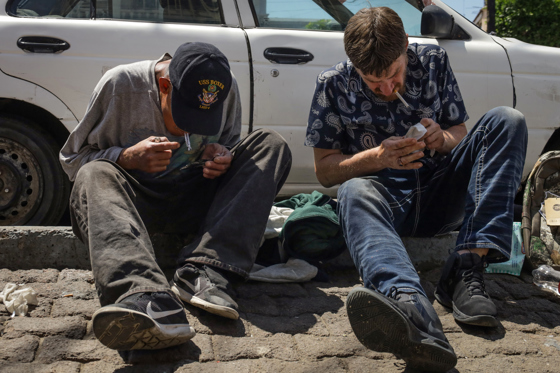
“They are not necessarily people who live permanently on the street. Some people come and go across the border, coexisting in both cities every day,” he explained.

He also mentioned that migratory, economic, and drug policies influence this mobility, turning the phenomenon into a binational matter that requires coordinated responses on both sides of the border.
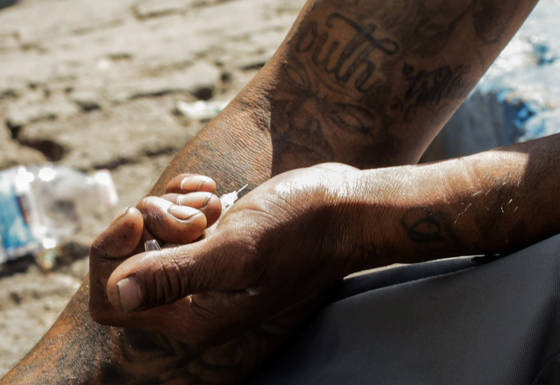
Such is the case of Mario Alberto Bustillo Chávez, an American who has resided in different cities in California, Utah, and North Carolina.
Bustillo also warned about how easily drugs can be obtained in Tijuana due to their low cost and wide availability. He considers that this situation deepens the city’s addiction problem.

“Living on the street is not an easy path for anyone. You have to be really strong,” he said, noting that many people in this situation are stigmatized and seen as “black sheep.”
Mike, originally from California, explained that the high cost of living in the US has prompted many Americans to settle temporarily in Tijuana.

He said he crosses into the US daily to register for and remain enrolled in government economic support programs. Mike uses these resources to sustain his stay in Mexico and cover expenses related to drug consumption.
As a local reference on the impact of the crisis, statistics from the Tijuana delegation of the Red Cross indicated that from Jan. 1 to May 13, 2026, 152 services related to overdoses were provided.

The figure reflects the pressure on the healthcare system due to the increase in opioid- and other substance-related emergencies in a city marked by constant transit between Mexico and the US. EFE
jt/dgp
