




Fujimori heads for fourth straight runoff in Peru’s presidential race!
Keiko lost on the three previous occasions against Ollanta Humala (2011), Pedro Pablo Kuczynski (2016) and Pedro Castillo (2021).
Lima, Peru.- Apr 12 (EFE).-
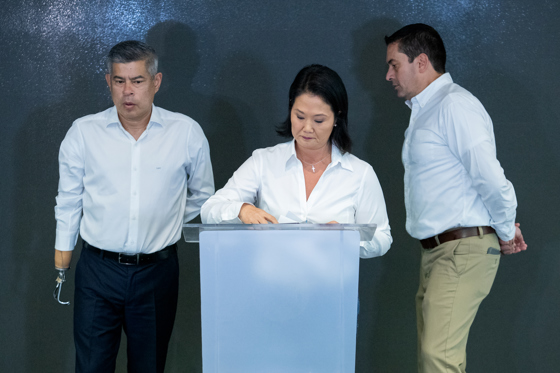
Keiko Fujimori, the daughter and political heir of late former President Alberto Fujimori (1990-2000), will compete in a second round of voting after Sunday’s presidential elections, against a rival that will be revealed after a long and slow count between six candidates who appear tied in the polls.

It is the fourth consecutive time that the candidate and leader of the Fujimorist Popular Force party will be in a second-round runoff, after having lost on the three previous occasions against Ollanta Humala (2011), Pedro Pablo Kuczynski (2016) and Pedro Castillo (2021).
The six candidates who, according to exit polls, have a chance of facing Fujimori in the second round are: leftist Roberto Sánchez (Together for Peru), far-right Rafael López Aliaga (Popular Renewal), centrist Jorge Nieto (Good Governance Party), populist Ricardo Belmont (Works Party) and right-wing comedian Carlos Álvarez (Country for All).

According to an survey by the Datum market research firm, which was conducted with 44,596 interviews and a margin of error of 3 percent, Fujimori obtained 16.5 percent of the votes, followed by López Aliaga, with 12.8 percent; Nieto, with 11.6 percent; and Belmont with 10.5 percent.
In turn, with a sample of 18,144 respondents and a margin of error of 3 percent, Ipsos pointed out, for its part, that Fujimori received 16.6 percent of the votes, leftist Roberto Sánchez, 12.1 percent; Belmont, 11.8 percent; López Aliaga, 11 percent; and Nieto, 10.7 percent.

The publication of the quick count has been suspended due to the extension of voting until Monday in 13 polling stations that could not open due to lack of voting material, while the scrutiny is progressing very slowly and, at 20 percent, it did not show conclusive results by showing only votes from urban centers, with López Aliaga in the lead with 20.7 percent.
Given the tight margin between those six candidates, it may be some time before Fujimori’s opponent in the second is known, due to the votes that must arrive from rural areas and overseas, with more than 1.2 million voters outside the country.

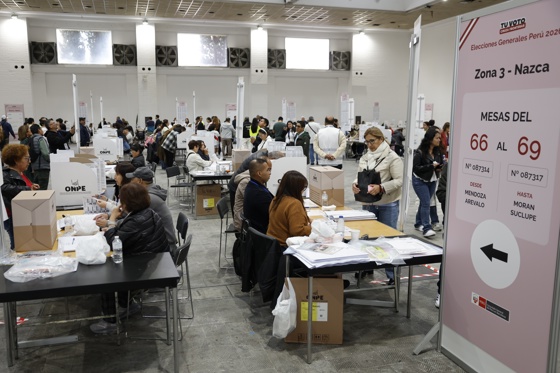
The election day was marked by major delays in the opening of important polling stations in the capital Lima, due to the lack of voting materials, which meant that some 52,000 people were unable to vote, a situation that prompted the National Jury of Elections (JNE) to authorize, in an unprecedented decision, that voting in those centers be done on Monday.
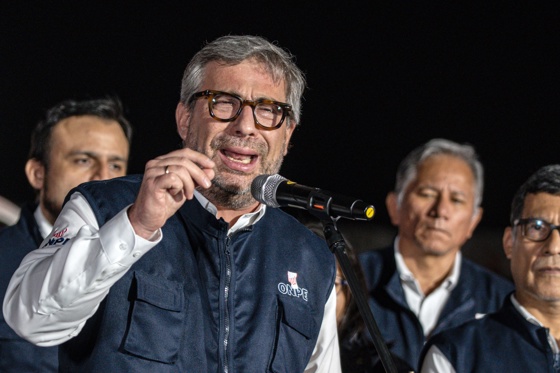
The National Office of Electoral Processes (ONPE), in charge of organizing the elections, attributed the problem to the company contracted for the distribution, which in some places arrived five hours after the start time of the voting.

According to the official report, 99.8 percent of polling stations were successfully installed across the country.
Despite the decision to extend the voting to Monday, Rafael López Aliaga filed a criminal complaint against the head of the ONPE, Piero Corvetto, for dereliction of duty and asked the Public Prosecutor’s Office to order his immediate detention, alleging that it was no coincidence that polling stations were left unopened in areas where his party had strong support.
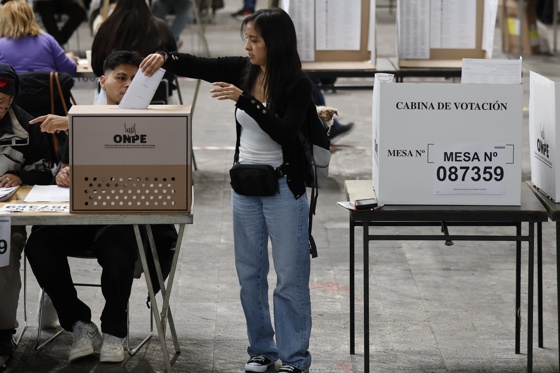
However, both the European Union (EU) and the Organization of American States (OAS) election observation missions reported an election day without irregularities and with a large turnout of voters, despite problems with the opening of certain polling stations. EFE
fgg/pd