




NASA’s Salvadorian Astronaut!
Austin, June 9 (EFE).-
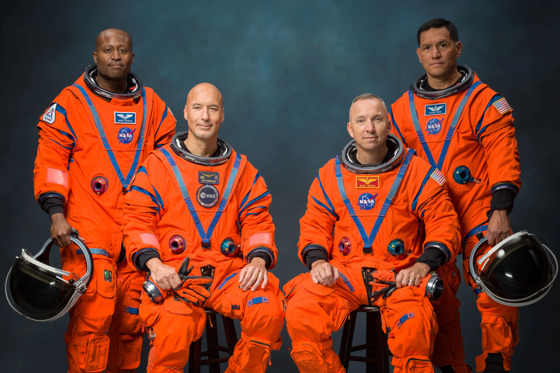
NASA presented on Tuesday the four astronauts who will make up the Artemis III mission, scheduled for 2027 and considered the next major step in the program that seeks to fly astronauts back to the Moon, more than half a century after the historic Apollo 17 mission.

The crew will be formed by mission specialists Andre Douglas, an engineer, and Frank Rubio, an aviation medical examiner of Salvadoran origin.
The Italian Luca Parmitano, from the Italian Space Agency, will serve as pilot; Randy Bresnik, former commander of the International Space Station, will lead the mission as commander.

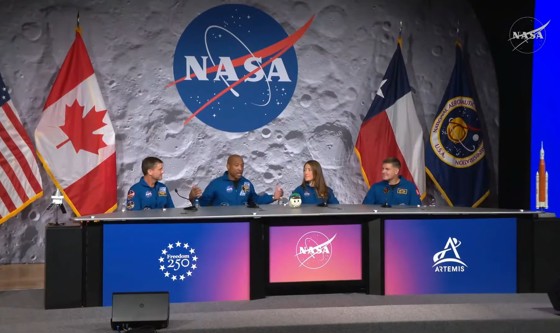
The announcement took place during an event at the Johnson Space Center in Houston, where NASA directors were present, along with representatives from the companies Blue Origin, owned by tycoon Jeff Bezos, and SpaceX, owned by billionaire Elon Musk, in charge of developing different systems for the mission.
Artemis III will run a test flight in Earth orbit to validate the technologies, tools, and procedures that will be used in future crewed missions to the Moon.

“Today we take another bold step in humanity’s return to the Moon, building on the extraordinary foundation laid by the Artemis II astronauts,” stated NASA administrator Jared Isaacman during the team’s presentation event.
The mission will test for the first time the ability of the Orion spacecraft to dock in space with test versions of the landers being developed by Blue Origin and SpaceX.

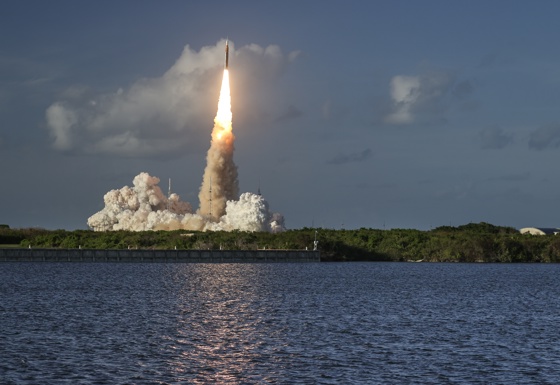
The plan contemplates several launches in a short period, including NASA’s SLS rocket and vehicles from both private companies.
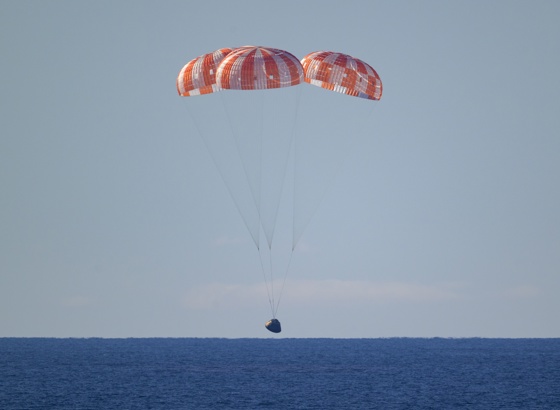
Artemis III will last approximately two weeks, about four days longer than the Artemis II mission, which flew over the Moon in April, and is intended to be the last major test mission of the Artemis program.
If it meets its objectives, NASA foresees that Artemis IV, scheduled for 2028, will mark the return of astronauts to the lunar surface, according to Jeremy Parsons, deputy head of the agency’s Moon-Mars program.

During the mission, Orion will first dock with a Blue Origin test module for approximately two days and subsequently with a test version of SpaceX’s Starship for about one day. The astronauts will conduct technological demonstrations and evaluate critical systems, including life support systems.
The crew announcement came two weeks after one of Blue Origin’s rockets exploded during an engine test flight at the Space Force Station in Florida, causing serious damage to the spacecraft and the launch platform.

Artemis IV aims to return astronauts to the lunar surface for the first time since Apollo 17 in 1972. The mission is a key step in the US strategy to establish a permanent human presence on the Moon and lay the groundwork for future trips to Mars. EFE
aaca/ags/dmv