




Sonia Manzano, the first Latina on ‘Sesame Street’: “In Hollywood, stories don’t change”
Miami, April 15 (EFE)
Actress and screenwriter Sonia Manzano, known for being the first Latina on the children’s program ‘Sesame Street’, championed the value of diversity in American television and recalled how her work helped break stereotypes in an industry where, for decades, Latinos had little presence and where “the stories don’t change”.

“I was born in New York and watched a lot of television, but I never saw anyone who looked like me or who lived in a neighborhood like mine,” explained Manzano, of Puerto Rican descent, in an interview with EFE, recalling her childhood in the Bronx neighborhood of New York, marked by the absence of role models on the small screen.
That experience, he said, was crucial in boosting his career: “I wanted to contribute to a society that didn’t see me.”

In the 1970s, at a time when American television offered a “limited and stereotypical image of minorities”, the addition of Manzano playing the character of Maria on ‘Sesame Street’ opened a window for millions of viewers.
“It was important for me to bring the stories of my neighborhood and my community to the screen,” she said.
The television program, created in the late 1960s as an educational tool for children, quickly became a cultural and pedagogical phenomenon that influenced several generations.

Manzano’s figure thus acquired special relevance. Not only did he represent a historically invisible community—the Latino community—but he did so from a place of normalcy, “without caricatures or clichés,” he mentions.
“I wanted to create a character that reflected who I was,” the 75-year-old actress said about the creation of Maria, a role that, she explained, sought to reflect the daily life of a real Latina woman, far removed from stereotypes.
“Maria was a happy person,” he added, emphasizing that his intention was to show a positive, approachable and recognizable image, in contrast to the “simple” representations that predominated on television at the time.

During more than four decades linked to the series, Manzano also worked as a screenwriter, helping to shape the stories and messages that defined the spirit of the show and opened the door to more diverse narratives.
“For me, it was important that the stories reflected real people, because I grew up without seeing anyone like me on television,” she confessed.
Another aspect that stood out was the inclusion of the Spanish language in the program, something unusual in American television at the time.
“I think they realized that there was another language in the world,” she said, convinced that this allowed millions of children to understand that other cultures and ways of communicating existed, contributing to normalizing diversity from an early age.
Despite the progress, the actress believes that the audiovisual industry still has an outstanding debt to inclusion and diversity.
“In Hollywood the stories don’t change, the only thing that changes are the actors,” he stated.

“We have to keep giving each other inspiration to tell the stories we have,” he added, in a message aimed at the new generations of Latino creators seeking to make their way in film and television.
From Maria to cultural icon
Manzano’s career, born in New York to a family of Puerto Rican origin, has been marked by that vocation to give voice to stories that previously had no space.
Before joining ‘Sesame Street’, she participated in experimental theater and productions linked to the Latin cultural movement, where she began to develop her artistic identity.

In addition to her work in television, she has published children’s books and memoirs, such as ‘Becoming Maria’, in which she explores her life and career from a personal perspective.
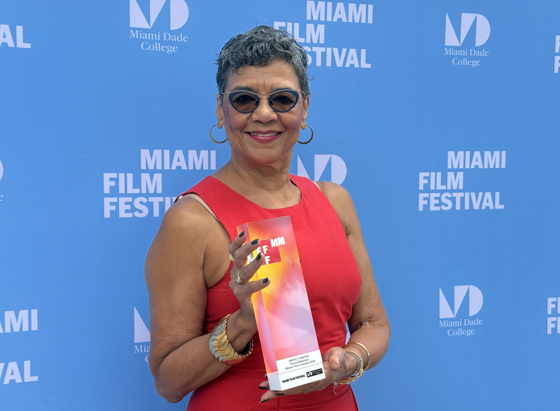
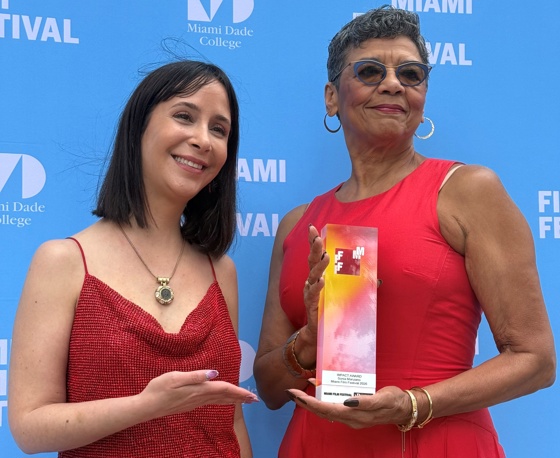
That story is precisely what is captured in the documentary ‘Street Smart: Lessons from a TV Icon’, directed by Ernie Bustamante, which is being presented these days at the Miami Film Festival (MFF), where Manzano has also been awarded the Impact Award for her career and her contribution to the industry.

“I never forgot where I came from,” Manzano said, explaining how his personal experience influenced his commitment to “a fairer representation” of the Latino community.
Today, her legacy remains alive not only in the memory of those who grew up watching her, but also in “the work of a new generation of creators” who, like her, seek to “tell their own stories.”
“The stories are there. What we have to do is keep telling them in our own way,” he concluded.
