




A Bustling Binational Commercial Flea Market!
Dominican Republic
Jimaní, Dominican Republic, Nov 13 (EFE).- By Jaime Ortega Carrascal
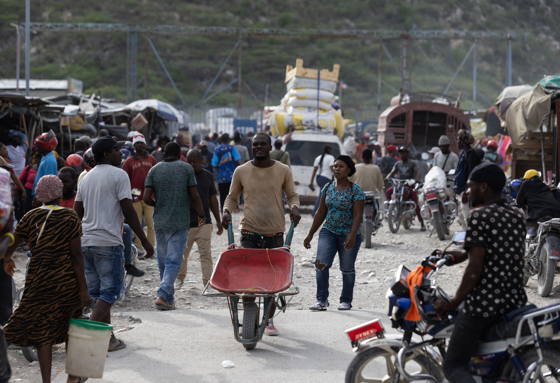
Every morning at eight o’clock, a metal gate swings open in Jimaní, a southwestern border crossing connecting the Dominican Republic with Haiti, allowing thousands of people to enter the binational market. Here, commerce remains vibrant and bustling despite the escalating crisis and violence paralyzing the neighboring nation.

On the Haitian side, officers from the Land Border Police (Polifront) open their own gate, letting crowds flow into “No Man’s Land.” This dusty 100-meter stretch of road precedes the official Dominican border, where armed military personnel closely monitor every movement, supported by post-mounted security cameras.
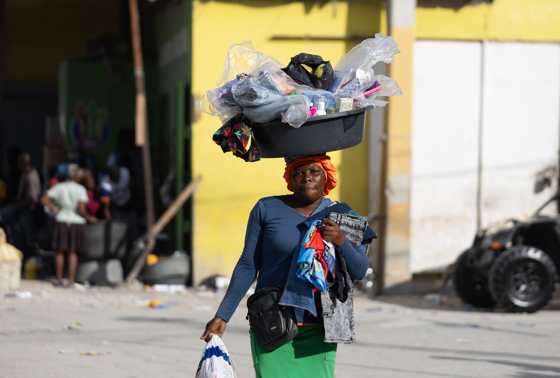
Haitians, many of them women, arrive carrying whatever harvest their impoverished fields could yield: modest batches of green plantains, pineapples, onions, potatoes, carrots, and tomatoes. Undersized due to a severe lack of fertilizer, the produce is displayed directly on the ground or laid out over sacks along the roadside.

Just three days ago, Haitian Prime Minister Alix Didier Fils-Aimé visited Kenscoff, an agricultural district southwest of Port-au-Prince where armed gangs have committed several massacres, the most recent in August, leaving at least 47 dead to boost economic recovery by distributing fertilizer, seeds for peppers, leeks, carrots, and cabbage, as well as farming tools.
Other vendors at the binational market offer chicken eggs or dried fish that attract swarms of flies, while streams of men push wheelbarrows packed with soft drinks, canned goods, toilet paper, plasticware, and other manufactured products bought in bulk to resell in Port-au-Prince, the capital currently largely controlled by armed gangs.
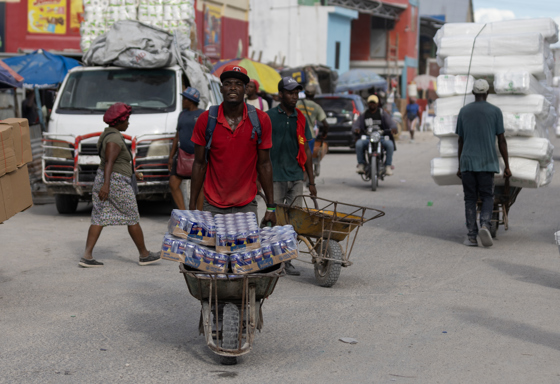
With a per capita GDP nearly five times that of Haiti (around 11,495 dollars in 2025 compared to 2,668 dollars), the Dominican Republic dominates this binational market, where Haitians turn to secure essential goods unavailable in their own country, which remains devastated by compounding political, economic, social, and security crises.

Distanced from the turmoil
“The problems don’t affect us here,” Anil, a Haitian worker loading and unloading crates at a warehouse steps away from “No Man’s Land,” told EFE. He claims he earns an average of 200 Dominican pesos (around 3.30 dollars) per day.
Most Haitians prefer to avoid commenting on the country’s political situation, emphasizing that security conditions along the border differ sharply from the capital, allowing the market to function normally.
“There are no security issues here. Sales ebb and flow occasionally due to security checkpoints, but you don’t hear gunshots or anything like that. You can ask anyone else here and they’ll tell you the exact same thing,” Mily Pérez, a Dominican manager of a wholesale grocery shop, told EFE.

Pérez stacks crumpled stacks of Dominican pesos on a small desk serving as her office counter while meticulously sorting US dollar bills by denomination into a plastic tray. These two currencies dominate market transactions, whereas the Haitian gourde is rarely used except for small trades among Haitians themselves.
According to Colonel Mejía Guerrero, Director of Coordinated Border Management, roughly 700 vehicles pass through the binational market each week, ranging from large freight trucks to pickup trucks and tap-taps, all packed to capacity with passengers and goods, often piled high on the roofs.

Tap-taps are brightly painted buses decorated with vibrant colors, biblical verses, motivational quotes, or band names. They carry passengers and cargo tightly crammed together within small-windowed cabins.
Just before five in the afternoon, as the market gates close, the final shoppers depart. Some women head back on foot, balancing large bundles of goods gracefully on their heads, while others leave in vehicles bearing license plates with a motto reminding them of what their homeland once was, and what they hope it will become again: “Haiti. Pearl of the Antilles.” EFE

joc/dmv
