



Spain faces Asian hornet invasion that has left three dead in Galicia
O Saviñao, Spain, (EFEAGRO).
With its yellow legs and characteristic orange stripe, the Asian hornet has colonized Galicia in just over a decade and caused three deaths in only two weeks during October, but it also strikes terror among beekeepers, who can lose up to 50 percent of their bees.
Larger than the common wasps known in Spain, this invasive species of Asian origin nests in diverse environments, both rural and urban, and is highly adaptable to the climate and territory, which has allowed it to spread throughout Galicia.

“There are nests everywhere. In 2012, two nests were detected in Galicia, and by 2016, this figure had risen to almost 11,000,” said Xesús Feás, a veterinarian, professor at the Universitat Carlemany, and expert on velutin wasps.
For Feás, the three deaths in such a short time are “no coincidence”, as exposure to this wasp is increasing, with Galicia accounting for almost 36 per cent of deaths in Spain.
Although this predatory wasp is no more dangerous than any other wasp or bee, problems arise when people are allergic or when a large amount of venom is injected following multiple stings.

“If there is a papule larger than 10 centimetres, you should consult a doctor, not to mention if there is loss of consciousness or general itching,” says Feás.
The Asian hornet does not attack without reason; it only attacks when it feels threatened.
This is what is suspected to have happened to the three men who died in Galicia; it is thought that they stepped on a nest while clearing brush or hunting, provoking an attack.
However, they do attack bees and are major predators of this species and other pollinators.
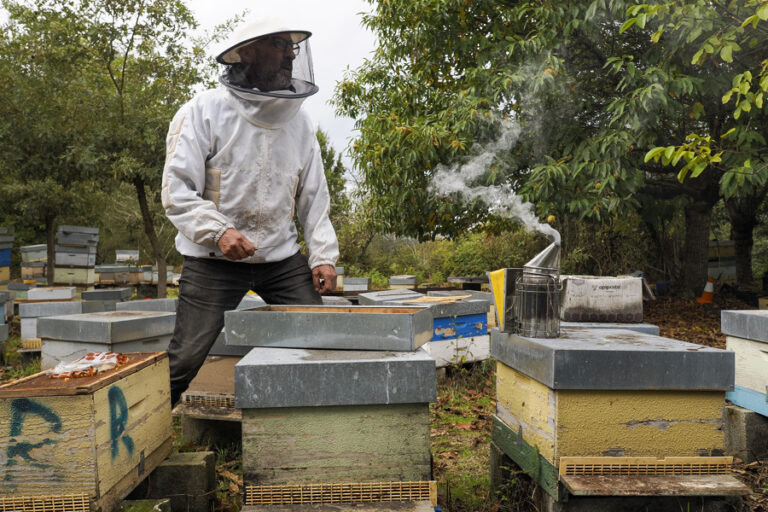
Apiaries are their favourite food source, which is a nightmare for beekeepers.

According to Gonzalo Calvo, a veterinarian and the vice president of the Galician Beekeepers Association (AGA), beekeepers can lose up to 50 per cent of their bees due to this predatory wasp.
Beekeepers have tried everything to combat it, such as installing electric harps, but “the invasion is so widespread and covers such a large area that, at best, they manage to protect their apiaries a little,” says Calvo.
Galician authorities acknowledge that there has been an extraordinary increase in reports of Asian hornets, and the regional government has launched a program, setting 18,500 traps this year, which have captured more than 230,000 queens and reduced reports by 30 percent.

More than 16,400 nests have also been removed so far in 2025, but those affected and experts believe that the measures are neither sufficient nor entirely effective.
“You won’t find any scientific article that recommends intensive mass trapping,” says Feás, who insists that “every nest that is detected must be removed,” especially during the breeding season, but this is not being done.
The beekeepers’ association is proposing a pilot plan on a small area of land, about 10 kilometers in diameter, where traps will be placed every 300 meters in the spring and regularly maintained to check their effectiveness, as they also kill other insects.

Calvo notes that when the nests reach an average size, they must be attacked with biocides and Trojan traps, which allow the wasps to carry the insecticide to the nest themselves.
“Placing hundreds or thousands of traps throughout Galicia is not effective and is costly. We can see the results: nothing or very little has been achieved. They have simply colonized the whole of Galicia,” he laments.