


Cuba says US indictment is “political provocation”
Cuba says Castro is “the leader of the Cuban Revolution”
Havana, May 20 (EFE).-
The Cuban government condemned “in the strongest terms” the indictment filed in the United States on Wednesday against former President Raúl Castro (2006-2018) regarding the downing by Cuban forces of two light aircraft in 1996, calling it a “political provocation.”

”The US government lacks the legitimacy and jurisdiction to carry out this action. This is a despicable and infamous act of political provocation, based on the dishonest manipulation of the incident that led to the shootdown over Cuban airspace in February 1996,” read the Cuban government’s statement.
It also noted that Washington “omits, among other details, the multiple formal complaints filed by Cuba during that period with the State Department, the US Federal Aviation Administration, and the International Civil Aviation Organization, regarding over 25 serious and deliberate violations of the island’s airspace” by the organization Brothers to the Rescue, based in Miami.

Havana affirmed that its response “constituted an act of self-defense, protected by the United Nations Charter, the 1944 Chicago Convention on International Civil Aviation, and the principles of air sovereignty and proportionality.”
”The United States, which has been a victim of the use of civil aviation for terrorist purposes, does not and would not permit the hostile and provocative violation of its territory by foreign aircraft and would act, as it has demonstrated, with the use of force,” it added.
The Cuban government further considered “highly cynical” that “this accusation is being made by the very same government that has killed nearly 200 people and destroyed 57 vessels in international waters in the Caribbean and the Pacific, far from US territory, through the disproportionate use of military force, for alleged links to drug trafficking operations that have never been proven.”
It also dismissed as “spurious” the accusation against “the leader of the Cuban Revolution,” Raúl Castro, and attributed it to “the desperate attempts by anti-Cuban elements to construct a fraudulent narrative” against the island through the reinforcement of “unilateral coercive measures.”

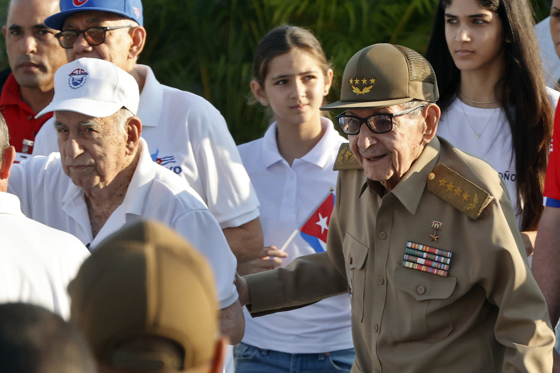
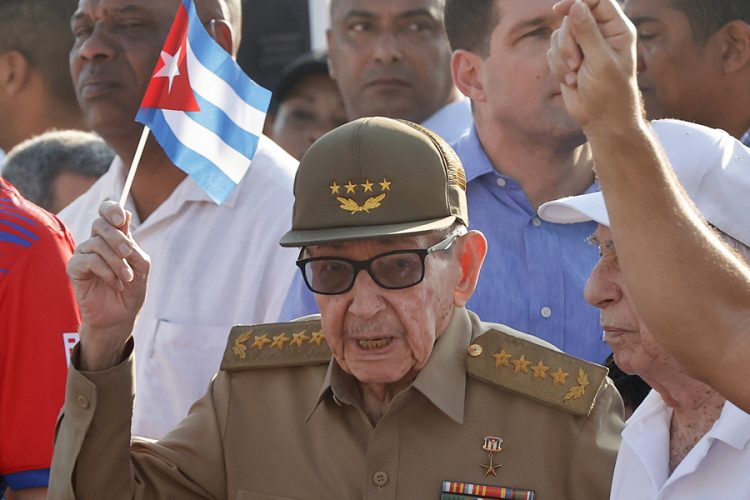
The accusation against Castro, 94, emerged amid growing pressure from the administration of US President Donald Trump against the Cuban government, which includes a five-month oil embargo and an expansion of economic sanctions against the island.
Trump has imposed an oil embargo on the island, escalated his threats to “take control” of the country, and expanded sanctions against the Cuban leadership and the military-industrial conglomerate Gaesa, which accounts for 40% of the island’s gross domestic product (GDP), according to the most conservative estimates.

These actions, coupled with the capture in January in Caracas of Venezuelan President Nicolás Maduro, a key ally of Cuba, have deepened the economic and humanitarian crisis afflicting the island, which is facing oil shortages and energy problems. EFE rmo/mcd