




Colombia’s Chocó “Marshall Plan”
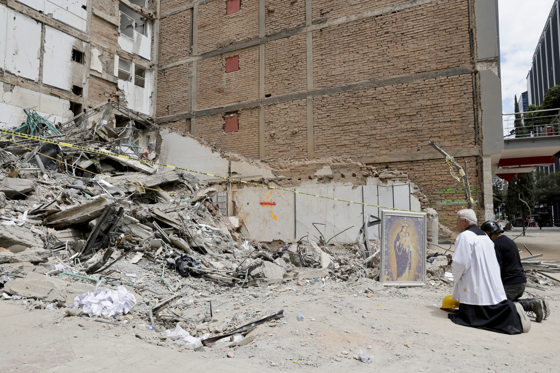
Colombia raises earthquake death toll to 285.
Bogotá, Aug 14 (EFE).-
A proposed “Marshall Plan” for the department of Chocó in the west of the country was announced on Friday, alongside the arrival of new international rescue teams and 200 million dollars in aid from the World Bank.
Four days after the earthquake hit Colombia, the death toll stands at 285, with 3,975 people injured and thousands displaced. A further 379 people are still missing.

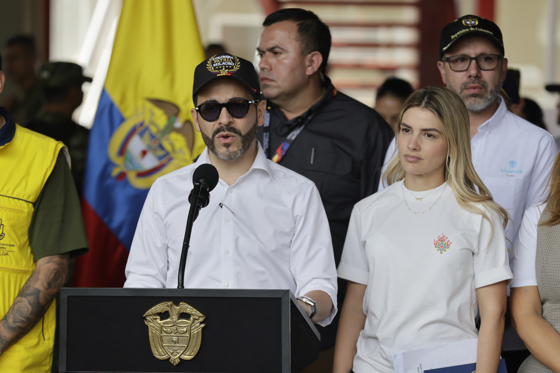
During a visit to Quibdó, a city in Colombia’s Pacific region, Colombian President Abelardo de la Espriella proposed a special reconstruction plan for Chocó.
It is one of the country’s poorest regions and was the epicenter of the 7.4-magnitude earthquake, the strongest to be recorded in Colombia so far this century.
“I want to propose a special plan, a ‘Marshall Plan’ for Chocó. Chocó has been left to fend for itself by the centralization of power in Bogotá, as if it didn’t exist,” said the president, who returned to the region on Friday following an initial visit on Monday.

After visiting Quibdó, De la Espriella traveled to Pereira, one of the cities worst affected by the earthquake, where he described the situation as “apocalyptic” after touring the city center and meeting with local authorities.
“Walking through downtown Pereira breaks your heart. But we Colombians are used to rising to the challenge in the face of adversity, and believe me, this situation won’t overwhelm us,” he said.
De la Espriella noted that following this visit, he would continue his tour through El Cairo and Toro in northern Valle del Cauca, before ending the day in Cali, where he had taken office as president just a week earlier.
In 1948, the United States approved the “European Recovery Plan,” known today as the Marshall Plan, which provided 13 billion dollars in aid to European nations following World War II.

The latest report from the National Unit for Disaster Risk Management (UNGRD), released on Friday, raised the death toll to 285 and kept the number of missing individuals at 379. The disaster has also left 3,975 people injured and affected 102,262 individuals from 45,523 families.
The earthquake destroyed 12,828 homes and damaged another 73,455. A further 121 buildings collapsed, and 2,205 schools, 240 health centers, 44 bridges and 73 aqueducts were damaged.
A total of 426 municipalities in 15 of the country’s 32 departments were affected in some way, primarily in Chocó, Risaralda, Valle del Cauca, Caldas and Quindío.
As reconstruction plans begin to take shape, national and international rescue teams continue to search through the rubble. As of Friday, they had rescued 354 people, according to the UNGRD.

In Cali, authorities extended the search for survivors by 48 hours. Approximately 1,800 rescue workers are participating in the search for at least 111 missing individuals in the city.
“We are sparing no effort. We have state-of-the-art technology, the best rescue workers in Colombia, and the best rescue workers from around the world continue to arrive as well,” Cali Mayor Alejandro Eder told EFE.
On Friday, a contingent of 82 military personnel from the Israel Defense Forces joined these efforts. The group included rescue workers, engineers, and specialists, and they were deployed to three areas in Cali.
Among the hundreds of families awaiting news are the relatives of Mario Zapata and Brenda Flores, Mexicans who have been missing since Monday in Pereira. They were staying at the Dibeni Hotel, one of the structures damaged by the earthquake.
Four days after the earthquake, trucks and backhoes have begun clearing the rubble in that city, and some businesses have reopened. Residents are trying to recover some of their belongings and resume their daily lives.
Recovery aid
The international response began to look beyond immediate rescue efforts. On Friday, the World Bank announced 200 million dollars in aid, disbursed the previous day, to support emergency relief and lay the groundwork for recovery.
The World Bank will also conduct a rapid damage assessment to estimate economic losses and help the Colombian government establish reconstruction priorities.

Italy approved a 4.5 million euros package for humanitarian aid and recovery projects for affected communities. Part of this package will be implemented in collaboration with United Nations agencies and the International Federation of Red Cross and Red Crescent Societies.
The UNHCR warned about the situation of displaced communities affected by the earthquake. Many of these communities are facing the loss of their homes again.

The humanitarian organization noted that it has secured funding for only 20% of the 86.2 million dollars needed by 2026 to assist displaced persons and refugees in Colombia.EFE
lnm/dgp
