“The Legend of Zelda”
Madrid, Nov 1 (EFE).- By María Roldán
From Japanese puppet theater and anime to the forests that inspired its creator as a child and the watercolors of Paul Cézanne, the artistic identity of “The Legend of Zelda” has evolved with every installment of one of video gaming’s most acclaimed sagas.

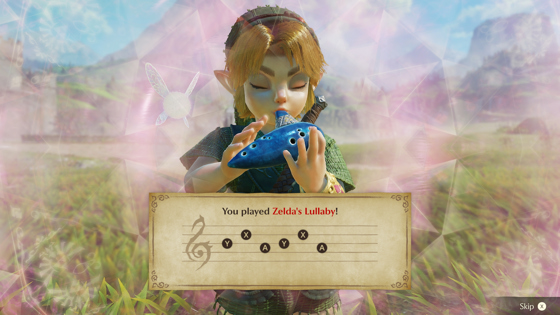
The arrival of the long-awaited remake of “The Legend of Zelda: Ocarina of Time” on Nov. 5 for the Switch 2 has sparked mixed reactions among fans, with its radically redesigned visuals departing sharply from the relative simplicity of the 1998 original.
The new aesthetic features distinctive character designs that some observers say resemble those of traditional Japanese puppet theater.
It is not the first time Nintendo has reinvented the saga’s visual style.

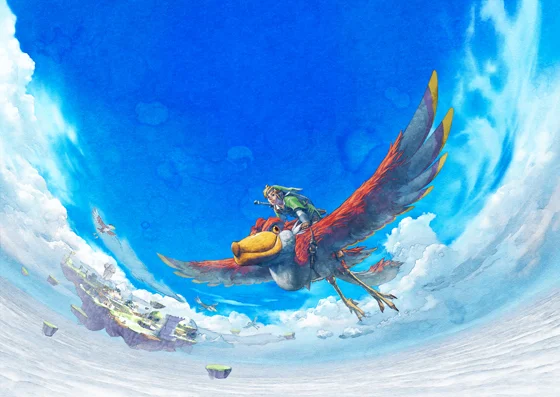
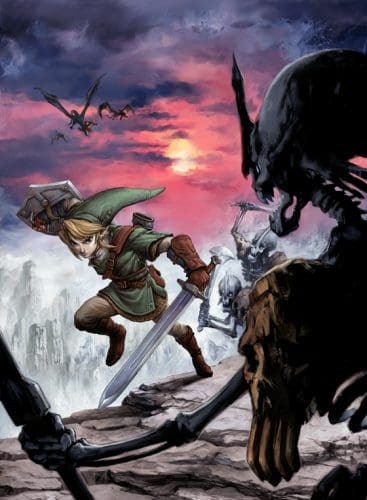
The cartoon-like, cel-shaded look of “The Wind Waker” (2002), the darker and more mature aesthetic of “Twilight Princess” (2006), and the impressionist watercolor-inspired visuals of “Skyward Sword” (2011) all initially divided opinion before becoming defining entries in the series.
The latest debate centers on ‘ningyôgeki’, a Japanese term for puppet theater encompassing marionettes and other forms of puppetry.
Such performances have long been used in Japan and other cultures to bring stories and legends to life.
Shigeru Miyamoto, the creator of the Zelda saga, is also known to admire the art form.

Puppet theater, anime and painting
The theory that ‘ningyôgeki’ influenced the new “Ocarina of Time” design emerged after Japanese video game artist Takaya Imamura posted a comment on social media.
“Looking at the models this time, I felt… Miyamoto-san’s love for puppets is also clearly visible here,” he wrote, alongside an image of the adult Link character shared by the game’s official account.
Imamura worked at Nintendo for more than 30 years before leaving the company in 2021.
Among other projects, he served as art director for “The Legend of Zelda: Majora’s Mask” (2000).
The theory gained traction after fans pointed to similarities between the new character designs and the puppets used in “Shin sanjûshi” (‘The New Three Musketeers’), a 2009 television adaptation produced by Japanese public broadcaster NHK.

The production, written and directed by playwright and filmmaker Kôki Mitani, sought to give its puppets a realistic visual appearance.
The resemblance is particularly noticeable in the new Zelda designs’ upturned noses, pointed ears and sharply defined features, which recall the carved figures created by Studio Nova for the television production.
Imamura has stressed that his observation is a personal interpretation, while Nintendo has declined to comment.

“Looking at them side by side, there is undoubtedly a strong resemblance,” Spanish illustrator Toni Infante, who has worked on the Zelda saga, told EFE.
“We must bear in mind that in the West, we may miss the specific Japanese references that inspire the development team. Imamura himself helps us understand this graphic style by connecting it with Japanese puppet theater,” he added.
Infante notes that puppet theater often reinterprets familiar stories, both classic and modern, presenting them in fresh ways for new audiences, much as Nintendo is seeking to do with this new version of “Ocarina of Time.”

The new look has nevertheless divided longtime fans.
“Nothing new under the sun,” Infante said.”Nintendo always looks to surprise and offer something unexpected. Nobody expected this style, and the company surely anticipated a mixed reaction. It is the price to pay for breaking away from the prevailing trend.”
Studio Nova is also familiar with the video game industry.
The company created physical models during the development of “Dragon Quest VII Reimagined,” another remake of one of Japan’s most influential video game franchises.

A saga defined by artistic diversity
“The Legend of Zelda” has consistently experimented with its visual language, moving from the 16-bit pixel art of the 1990s to cartoon-inspired graphics, more realistic designs, and anime-influenced styles.
These changes have frequently prompted debate among fans.
“That artistic and design evolution is precisely what keeps the Zelda saga fresh through the decades,” Infante said.
“It is turning 40, no less, and it is undeniable that any franchise risks showing signs of wear if it does not reinvent itself over the years.”
Each installment, he argued, has shown that the series is defined not by a single visual style but by “an experience, an adventure, and an underlying mythology” that is repeated and transformed from one game to the next.

Its diversity of styles has become part of its identity.
By sometimes going against prevailing trends, the saga has produced artistic choices that, despite initially provoking controversy, can become “timeless in the long run,” Infante said.
The visual world of Zelda has also inspired a body of publications and adaptations devoted to its artistic details, including a three-volume illustrated encyclopedia published by Norma Editorial, art books covering many of the games and a range of comic adaptations. EFE
mr-sk