





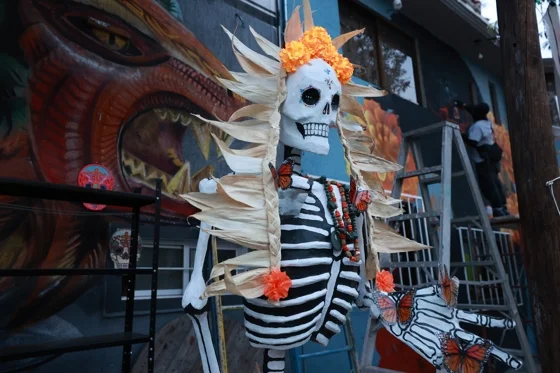
A Mexican Tradition with global expansion!
Madrid, Oct 30 (EFE).- By Brenda Guadalupe Hernández
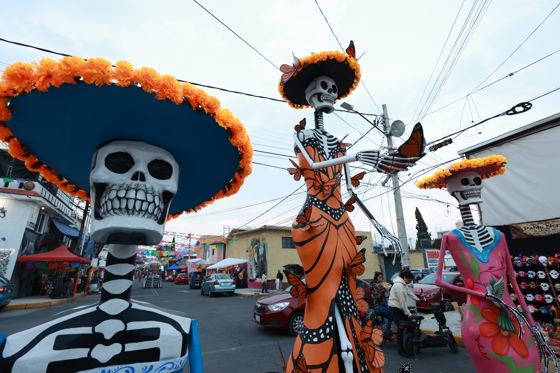
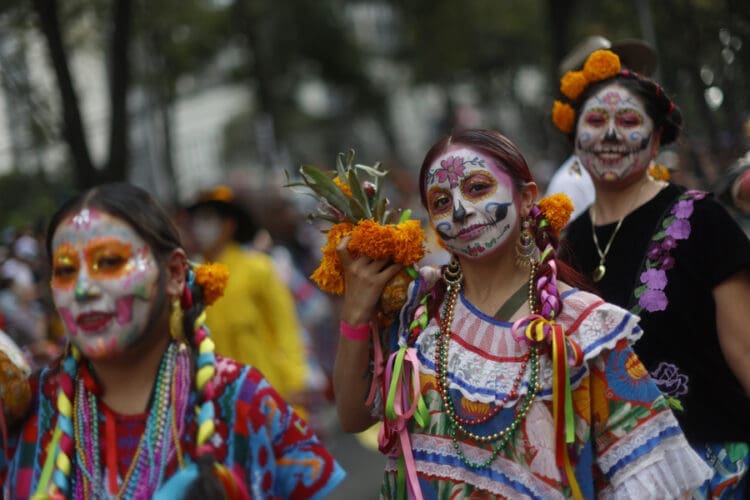
Over the past decade, the Day of the Dead transformed from an exclusively Mexican tradition into a global celebration. Altars, skulls, and catrinas now decorate homes worldwide, with parades scheduled over the week in major cities including Madrid, New York, and Tokyo.

“We are all potential skulls, and not just any skulls, but part of the common crowd,” explains Manuel Álvarez Junco, author of ‘Una calavera del montón. Humor y Muerte’ (A Skull in the Crowd: Humor and Death), in interview with EFE.
In his book, the researcher and graphic artist offers a sweeping historical overview of visual representations of death, showing how wit and humor have served as a “balm” against what he calls “the greatest challenge of our lives.”

From Ancient Greece to Mexican folklore
Graphic humor and its transgressive nature are subjects Álvarez Junco studied for decades. While the idea of tackling death had long crossed his mind, he admits he hesitated to address it due to the solemn perspective surrounding the topic in Spain.
It was precisely through the Day of the Dead that he found the ideal intersection: a “curious mix” of humor and mortality that provided the ultimate breakthrough.
One of the book’s key contributions is highlighting the syncretic nature of the holiday. To better understand its distinct identity, Álvarez Junco traced European roots and humorous approaches to mortality from Ancient Greece and Rome through medieval dances of death to Spain’s Day of the Innocents.
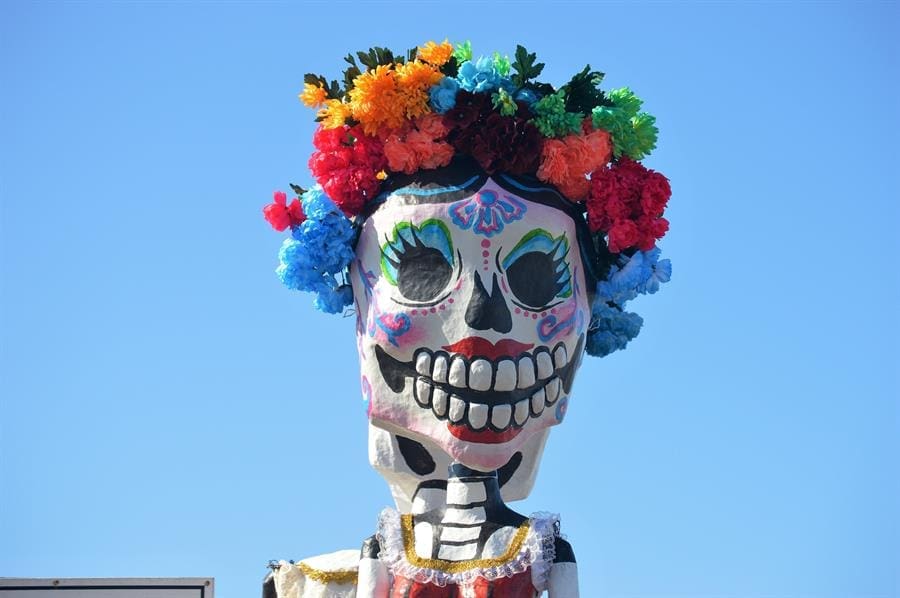
When these traditions blended with Mesoamerican Indigenous culture, which already incorporated music, dance, and lively gatherings in sacred rituals, or mitotes, it created the unique cultural fusion celebrated today.

José Posada, the genius behind La Catrina
During the book’s presentation at Casa de México in Madrid, Mexican historian Agustín Sánchez González, who collaborated on the research, noted the profound irony that José Guadalupe Posada, famous for creating La Catrina and one of Mexico’s most internationally recognized artists, died in anonymity.
“Posada was born the day he died,” remarked Sánchez González, noting that the printmaker, illustrator, and caricaturist passed away in the Tepito neighborhood and was buried in a mass grave, becoming, quite literally, “just another skull in the crowd.”

Posada created the iconic broad-hatted skeleton figure now recognized around the globe. Álvarez Junco credits Posada with an extraordinary achievement: stripping death of all mysticism.
“It carries no religious undertones, neither Spanish nor Mesoamerican. It is entirely secular and remarkably direct,” he notes.
This grounded portrayal of mortality may be the secret behind La Catrina’s enduring appeal; rather than offering moral judgment, it simply serves as a witty reminder of our shared destiny.

A living tradition in constant evolution
Far from a static tradition, the Day of the Dead remains dynamic. Globalization and popular culture, boosted by major films such as Pixar’s ‘Coco’ and James Bond’s ‘Spectre’, have brought widespread awareness to the celebration.
Álvarez Junco believes the global adoption of skeletal imagery and festive costumes reflects a universal human impulse to cope with tragedy and find humor in mortality.
In contrast to traditional solemnity, humor reveals that “there is more to life than death,” as Agustín Sánchez observed. EFE
bghl/dmv
