




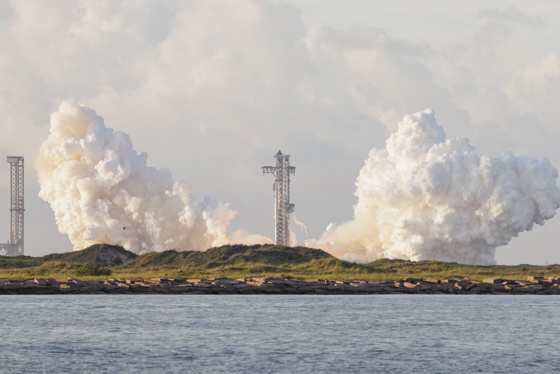
Space X Milestone!
SpaceX Miami, US, Sep 28 (EFE).-
SpaceX successfully put its Starship megarocket into Earth orbit for the first time on Monday, in what was its 14th test flight marking a significant milestone for Elon Musk’s company and the program, opening the way to its goal of achieving a fully reusable system.
The flight lifted off around 8.49am US East Coast time (12:49 GMT) from Starbase, SpaceX’s facility in the southern tip of Texas, on the Gulf of Mexico coast and near the Mexican border.

The mission is to reach an altitude of approximately 275 kilometers (170 miles) above Earth and complete about six orbits around the planet during a nearly 10-hour flight, before making a splashdown in the Pacific Ocean, west of Chile.
So far, Starship missions had deliberately followed passively safe suborbital trajectories to maximize public safety and allow data collection during actual flights.
This was a “huge milestone for the Starship teams,” a SpaceX employee said on the company’s livestream.
Reaching orbit and staying there depends on the speed the ship maintains, not so much the altitude achieved, experts explained.
Once it ascends high enough to clear the obstacles, it must travel sideways at great speed – about 28,000 kilometers per hour (17,500 mph) in low Earth orbit – so that, as gravity pulls it toward Earth, the planet’s curvature moves away from it at an equivalent rate.

Improving the internet
The flight was also expected to deploy 26 Starlink V3 internet satellites, intended to increase speeds for users.
The mission will add a total of 26 Tbps, approximately twenty times the capacity of a Falcon 9 mission with Starlink V2 mini satellites.
Once deployed from Starship, the satellites will unfurl their antennas and solar panels and establish their first links with Earth and the rest of the constellation using radio frequency and laser links.
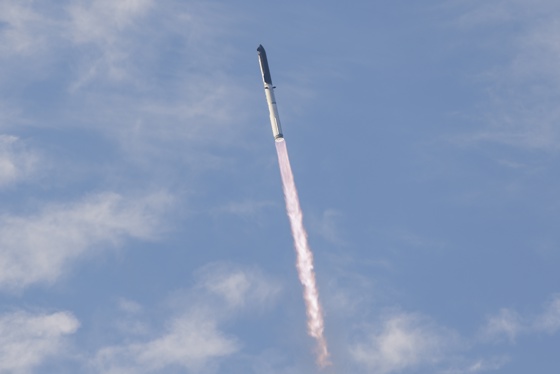
They will then raise their orbits with their own thrusters and, once in-orbit checks are complete, could begin serving customers just weeks after launch.
Three of the satellites will incorporate modified cameras to scan Starship’s heat shield and transmit images.

Heat shield tests
This mission will also further test various improvements and experiments related to the heat shield, some derived directly from data obtained during flight 13, when Starship remained floating in the Indian Ocean.

The ship incorporates additional mechanisms to secure the heat shield tiles in areas where there is a higher risk of them detaching during ascent. EFE ims/sc