



Mexico City, Feb 13 (EFE)
The Mexican government presented a new Federal Film and Audiovisual Law on Friday, replacing the framework in place since 1992, along with reforms to protect voice actors from the use of artificial intelligence (AI), with the aim of boosting national production.

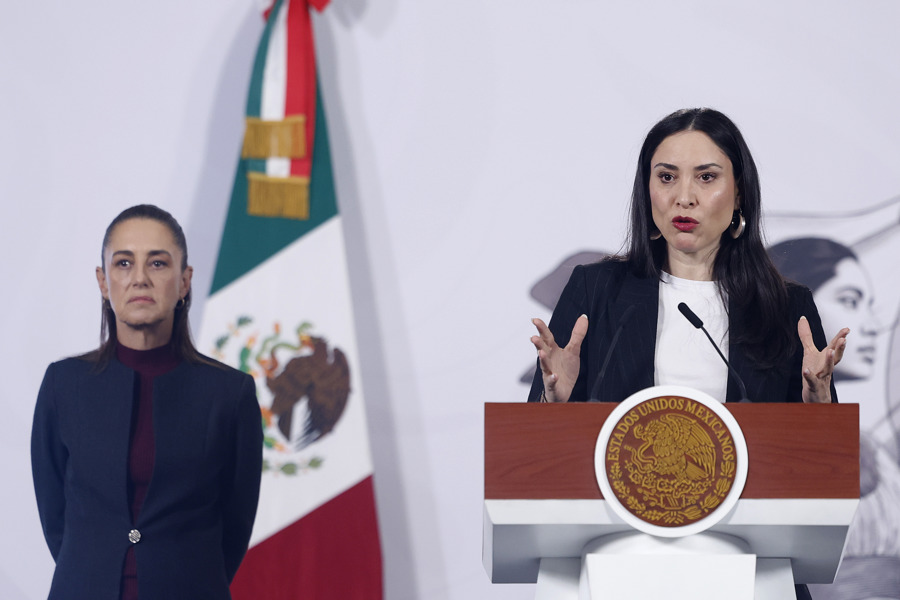
“These are initiatives that have been awaited, especially the one concerning film, for many years, as well as the one for voice actors,” stated Claudia Curiel, Mexico’s Secretary of Culture, during the presidential press conference, indicating that the proposals respond to long-standing demands from the sector.
Curiel argued that the current legislation has become outdated in the face of technological and production changes, as the current federal film law dates back to the end of the last century.

“The most important aspect of this law is that the 1992 law emerged in a neoliberal context, where the work was viewed primarily as a commodity, and what was done in this 2026 law is to develop it based on cultural rights,” she pointed out.
Among the key measures highlighted was ensuring the presence of Mexican films in theaters.
“The exhibition of Mexican films in theaters is guaranteed at 10%,” said Curiel, while also indicating reviews of film listings and an expansion of minimum exhibition periods to improve their visibility. The reform

also establishes the preservation of audiovisual heritage with “a mandate to conserve, restore, digitize, and disseminate the heritage that forms part of our collective memory,” and incorporates state support for the sector into the law.
For her part, Mayor Claudia Sheinbaum defended the country’s potential in the audiovisual industry and linked the reform to goals of international positioning.

“With all the support and all these new adjustments and proposals that have been made to the law, Mexico will have the capacity to enter the top five in terms of these productions worldwide this year,” she declared.
Sheinbaum emphasized the country’s creative capital and the expansion of public support for independent projects.
In Mexico, in his opinion, “there is exceptional creativity”: “There are extraordinary filmmakers, (…) Mexico’s film schools are among the best in the world,” he stated, noting that the increased funding aims to prioritize productions with less financing.

The law also intends to ensure the distribution of content “to guarantee its transmission in theaters and its presentation in cinemas as well as on streaming platforms.”
The second initiative addresses the concerns of the dubbing industry regarding AI. Curiel indicated that “for the first time” the human voice will be recognized as an artistic tool, “unique and irreplaceable.”

Meanwhile, Sheinbaum emphasized the importance of the sector, asserting that “Mexico has some of the best voice actors in the world” and that now “they will be protected.”
Finally, the mayor announced that on Sunday she will unveil economic incentives for film and television production in the country, and that she will have the special participation of Veracruz-born actress and producer Salma Hayek, who personally requested her support and encouragement for this initiative.