


Chilean Patagonia community leads plan to conserve its territory and culture.
Santiago, Chile, Jan 27 (EFE) –
The community of Palena, in Chilean Patagonia, has designed a territorial conservation model to protect nature and at the same time safeguard the traditional practices of the Patagonian muleteers, this, amidst its proposal to the State to turn its territory into a conservation area.
“Protecting this area guarantees the water supply, the stability of ecosystems, and the conservation of species that exist only in this zone. Furthermore, conserving this area is key to maintaining the cultural identity and way of life of our community,” Edgardo Moya, Communications Officer for the Municipality of Palena, told EFE.

For Moya, the conservation of “one of the most relevant mountain ecosystems” in the commune is also “deeply important” because it is a territory with “unique” biodiversity with pristine native forests, strategic water basins and a “landscape richness” that represents the natural heritage of Chile.
Palena is a commune in the Los Lagos Region, the tenth region of Chile (in the south of the country), with approximately 1,800 inhabitants. It has a mountainous geography and borders Argentina. This area boasts nearly 1,200 hectares of glaciers, the source of rivers and streams that feed the main rivers of the region.

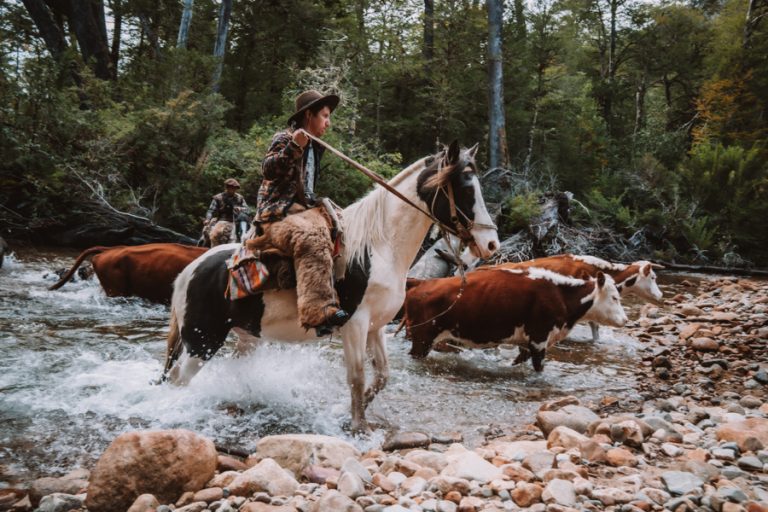
This cultural richness coexists with cultural activities such as the summer grazing, an ancestral practice in which farmers take their livestock to graze in the mountains during the summer, favoring the regeneration of pastures in the plains for the winter.
In addition, Palena is also home to protected fauna, such as condors, pudús, Patagonian vicuñas, among other species that, because it is on land managed by the Ministry of National Assets, could be given in concession “at any time” for another use that could put all its ecological attributes at risk.
Community initiative

This conservation goal has brought together all parts of Palena for the common good, including tourism sector businesses, local government, livestock farmers, and academia.
“It all started with a working group on the protected areas of the commune and, before long, we realized that there was this area open to intervention, so the idea of protecting it was born,” Mauricio García, a tourism entrepreneur from the region, told EFE.

For his part, Moya recalled that, after the meetings, the parties recognized “from the beginning” that they did not have all the answers to the problems raised, so they sought specialized advice from academia.
“In that sense, the Austral Patagonia Program (of the Austral University of Chile) and the NGO Pew Trusts played a fundamental role,” he added.
Near target
For his part, forestry engineer Jorge Silva, from the Austral Patagonia Program, which seeks to propose actions for new protected areas, as well as improve their standards and effective management, explained to EFE that, “generally”, these territories start from the institutional or State interest to create them, but in the case of Palena it was the other way around.

“In this particular case, it’s the other way around; it’s the organized community that’s asking the State to create an area. So, the way and dynamics of how protected areas are created in Chile is somewhat reversed,” Silva said.
Furthermore, the engineer explained that the request for a new Multiple Use Conservation Area (ACMU) in Palena, structured since the beginning of the community consultation table in 2022, is currently under review by the Ministry of National Assets and there are still a series of stages to go before reaching the Council of Ministers, the final step to approve its creation.

“The initiative has no political affiliation,” Silva emphasized, adding that last May a corporation was created with representation from the City Council, the current mayor, and the project’s board of directors.
“Regardless of the political affiliations in the municipality, the initiative always transcends,” he noted.
Engineer Silva concluded that the Palense community hopes this ACMU will be finalized before the end of Gabriel Boric’s government on March 11, to avoid the change of administration forcing them to start the process again.