

Balloon pollution spoils wildlife’s party!
“The State We’re In” by Alison Mitchell, Executive Director, New Jersey Conservation Foundation.
There’s something undeniably cheerful about balloons. We buy them for birthday parties, graduations, weddings and other moments we celebrate. They’re colorful, familiar and, for a lot of people, simply part of the fun.

But what happens when we let them go?
It may seem like they sail off and disappear, but in reality, they always come back down somewhere – and too often, that somewhere is a beach, marsh, park, or the ocean.
Matt Gove, Mid-Atlantic policy manager for the Surfrider Foundation, has seen the problem firsthand through years of beach cleanups and advocacy. “We’ve just seen so much plastic on the beach and balloons are one of the big contributors.”

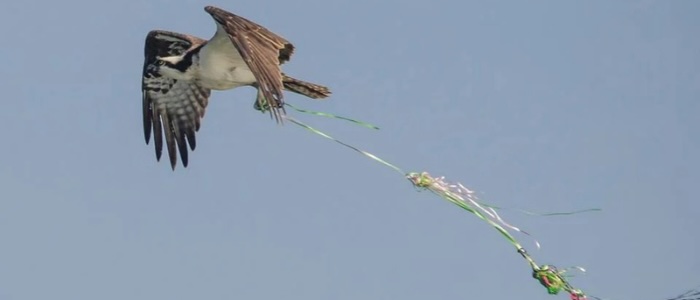
These festive bubbles can travel surprisingly far before they land. Once they do, wildlife can mistake them for food or become tangled in the plastic strings so often attached, causing harm or death to seabirds, sea turtles, and marine mammals.
Balloons are typically made from latex or Mylar, which don’t belong in the natural world and aren’t biodegradable. Both materials linger in the environment for centuries. There can be other consequences, too. Mylar balloons, which contain metal, can interfere with electrical equipment and cause outages.

Several states have taken steps to address intentional balloon releases. Virginia, Maryland, and Delaware have laws restricting or prohibiting the intentional outdoor releases of helium-filled, lighter-than-air balloons – the balloons that readily float away and eventually come back down as litter. The legislation doesn’t aim to entirely outlaw balloons or write tickets to children who accidentally let go of one (we’ve all been there!).
New Jersey has made some effort to address the problem but hasn’t succeeded. In recent years, state legislators have introduced bills targeting the intentional release of balloons. Two bills, one in 2022 and another in 2024, have been introduced in the legislature but never got to the finish line.
However, many towns in the state have succeeded in banning intentional balloon releases, and this could eventually lead to a statewide ban. The plastic bag ban began this way, with individual municipalities enacting ordinances until the State finally took action. That measure has significantly reduced both overall use and plastic bag litter according to a report by Clean Ocean Action.
There is encouraging evidence that balloon release laws can make a difference. Researchers monitoring Virginia’s Fisherman Island found an average of 240.6 pieces of balloon litter per mile before the state’s law and 174.9 pieces per mile afterward – a significant decline (though still too much!). Researchers are appropriately cautious about claiming that the law alone caused the decrease, since balloon litter is difficult to track and many factors can affect what ends up on a beach. Still, the trend is encouraging.
So, New Jerseyans, let’s take note!
We are a coastal state, surrounded by water and home to beaches, bays, rivers, and wetlands that are important to both people and wildlife. We’ve already shown that we’re willing to tackle plastic pollution, including through the statewide plastic bag law and the 2026 “Skip the Stuff” law, which prohibits the inclusion of single-use plastic utensils, condiment packets, and straws in takeout and delivery orders unless explicitly requested.
As Gove says, “There’s really no reason why legislators shouldn’t pass a bill.” He notes that even if the legislators don’t get it done, we can change what we choose to do at our own celebrations. For alternative, eco-friendly suggestions for gatherings, visit https://www.

If we can curb our use of balloons, it would be something to celebrate – especially for the New Jersey wildlife we love.
To learn more about preserving New Jersey’s land and natural resources, visit the New Jersey Conservation Foundation website at www.njconservation.org or contact me at info@njconservation.org.