

Sargassum, from a plague that cripples tourism to a promising weapon against the deadliest malaria
Panama City, Sep 4 (EFE)
When two researchers and a high school student began analyzing sargassum in Panama in 2023 as part of a school project, they had no idea that they would discover that this macroalga, which has become a nightmare for tourism in the Caribbean and an environmental risk, is a promising answer against the most potentially lethal form of malaria.
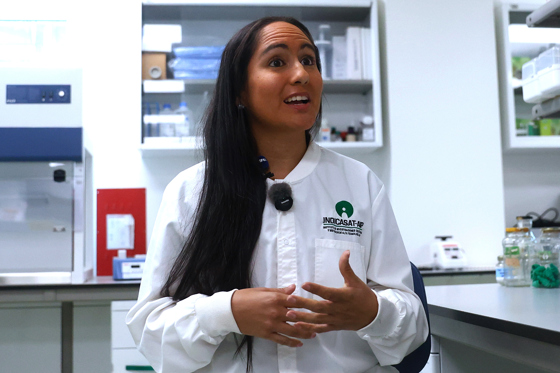
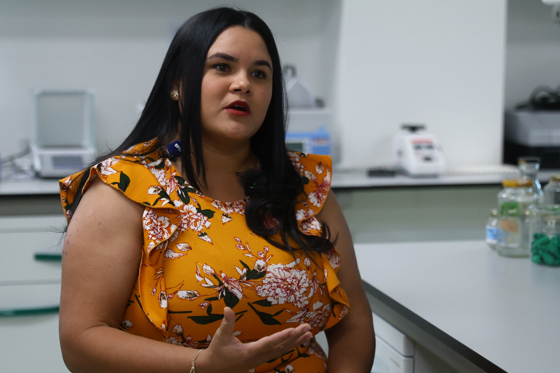
“It was a ‘wow!'” to observe that the compounds in the algae turned out to be “super active” and managed to significantly inhibit the growth of the Plasmodium falciparum parasite, the cause of cerebral malaria, one of the most dangerous forms of the disease, explained Dr. Lorena Coronado, a biotechnology expert, to EFE.

In one of the laboratories of the Institute of Scientific Research and High Technology Services of Panama (Indicasat-AIP), where she is a researcher, Coronado said that the “most beautiful surprise was” that the compound “was not toxic, it was not killing healthy cells, but it was very active against the parasite.”
“It’s a very promising result,” added Coronado, who, along with biology professor and algae researcher Noemí León de Santos and Isaac Almanza, then a senior high school student, are responsible for the study, which is still in its early stages and awaiting funding to continue.
The project originated from the Young Scientists Program of the National Secretariat of Science, Technology and Innovation (Senacyt).
An article on the research entitled ‘Antimalarial activity of pelagic Sargassum fluitans and Sargassum natans along the Caribbean coast of Panama’, was published last July in the indexed scientific journal Integrative and Comparative Biology of Oxford University Press.
In 2024, 282 million cases of malaria (transmitted by a mosquito) and 610,000 deaths were recorded worldwide, with Africa being the most affected, accounting for 95% of cases and deaths.
In the Americas, those figures were 536,644 and 136, respectively, according to the World Health Organization, and it is estimated that 30% corresponded to cerebral malaria.

Sargassum tea against cerebral malaria
There are several types of sargassum, including some native to Panama, but the one used in the study is the one that naturally washes up on the Panamanian Caribbean coast. There, Isaac and Professor León collected the fresh seaweed from the water, then dried it and prepared a tea.
“Simply” drying the algae, macerating it and making “your little tea” with the idea of taking it as a “prophylactic against malaria, nobody had done that before,” Coronado declared, explaining that the macroalga constitutes a fertile field of study to which a few colleagues from other countries have dedicated themselves but with a different approach.
In this case, they worked with the aqueous extract of sargassum, which was initially tested against cancer but did not work, which was a “low blow” for the researchers, who then moved on to joy with the positive result against cerebral malaria.
The curiosity of a teacher and her student
Sargassum “has been causing certain environmental problems in the Caribbean since 2011, and in Panama, currently, it is a public health threat,” said Professor León, because the seaweed, already rotting on the shore (which takes about 48 hours), releases toxic gases, among other associated risks.
It is also a growing problem for tourism: it floods the beaches, making swimming almost impossible and giving them a bad smell. This phenomenon has been observed on a massive scale in recent years on beaches in Mexico and some in the Dominican Republic.
León explained to EFE that he decided to analyze the sargassum because until 2023 “there was no record that the species that arrive in the Panamanian Caribbean were being studied against any disease.”

The macroalga is reproducing exponentially due to rising temperatures caused by climate change, León explained, which is a problem “but also an opportunity” for science, as Panamanian research is showing, he said.
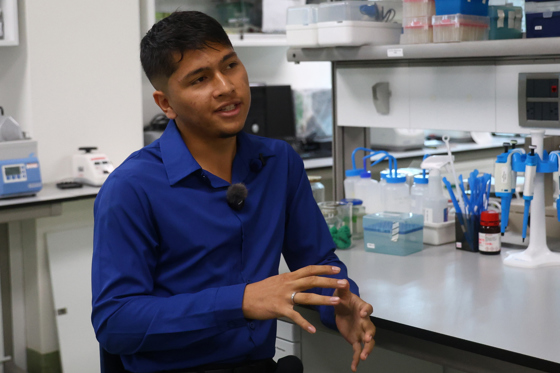
For Isaac, now 21 and a university student, participating in the study “was a pretty nice experience,” which “awakened” his curiosity.
This young Panamanian wants to continue the research, which must advance to a second phase to determine exactly what is the mechanism of action of sargassum against the parasite that produces cerebral malaria, and a third phase that will be the test in mice.
Isaac encouraged high school students “to dare to try new things” like research, because “even if they fail, they should come back and try again, because you never know how far you can go.”