





Puerto Rico’s Bomba and Plena Drums!
San Juan, Jan 30 (EFE).- By Esther Alaejos
Puerto Rico’s master artisans of Bomba barrels and Plena hand drums are the guardians of a traditional craft that is now echoing in stadiums worldwide. These ancestral percussion instruments are currently taking center stage on Bad Bunny’s international “DeBÍ TiRAR MáS FOToS” Tour.
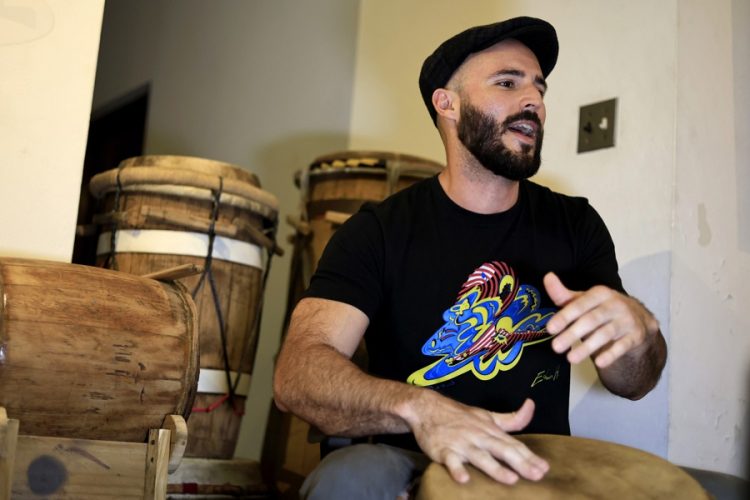
“Julito Gastón (Bad Bunny’s percussionist]) told me he wanted me to fix his drum for the Residencia (Bad Bunny’s 31-concert run in Puerto Rico last summer). I repaired it, and now he’s using it in his concerts,” Emanuel Martínez told EFE.

Martínez is the creator of one of the Bomba barrels currently resonating during Benito Antonio Martínez Ocasio’s global performances.
A native of Añasco in the island’s western region of the island, Martínez has crafted over 200 instruments using mahogany and cedar. He works across the three traditional construction styles of Bomba barrels: torniquete (tourniquet), cuña (wedge), and cáncamo (bolt); as well as the three types of Plena drums: the seguidor, punteador, and requinto.
“We were already seeing a resurgence, but this gave it the final push it needed to grow even further,” said the Bomba barrel artisan, noting the growing interest in these genres among the Puerto Rican population.

Bomba and Plena are two musical genres endemic to Puerto Rico that were once banned. They Originated with the Africans enslaved by the Spanish throughout the archipelago, these rhythms weave together a syncretism of Taíno, African, and European cultures, standing today as a powerful emblem of resistance against colonial oppression
Workshops: Passing Knowledge to a New Generation
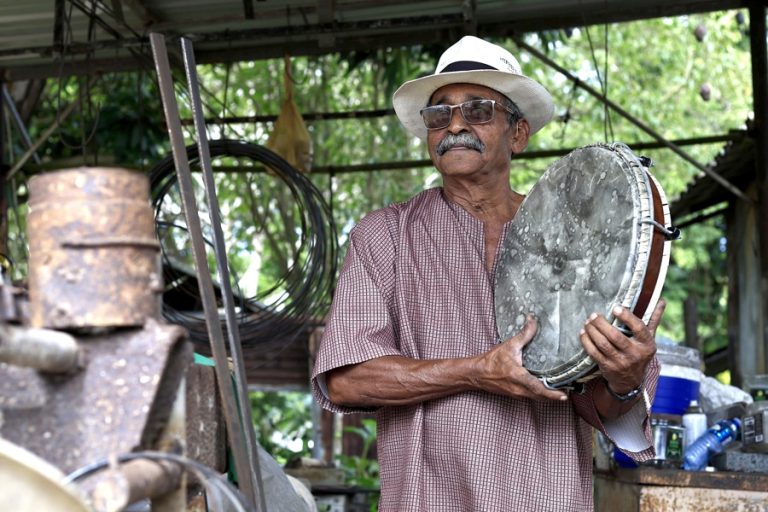
“From his workshop nestled in the backyard of his home in the northern town of Manatí, Rafael Trinidad recounts making his first drum in 1971. He was fascinated by the resonance of salsa timbas and drawn to the specialized process of curing goat or sheep hide to craft these sonic artifacts.

Over his 50-year career, Trinidad has focused on the art of Plena hand drums. A descendant of Bomba, Plena has historically served as a vehicle for social protest, local chronicles, and collective celebration. These are the values he now imparts in his workshops.
“Los Pleneros de la Cresta are from Ciales (a municipality in the mountain region) and I know them personally. One of them was a disciple of mine, learning how to manufacture Plena hand drums,” he remembers, referring to the training he gave Joseph Ocasio, one of the four members of the group that Bad Bunny catapulted to international fame with his track “Café con Ron.”

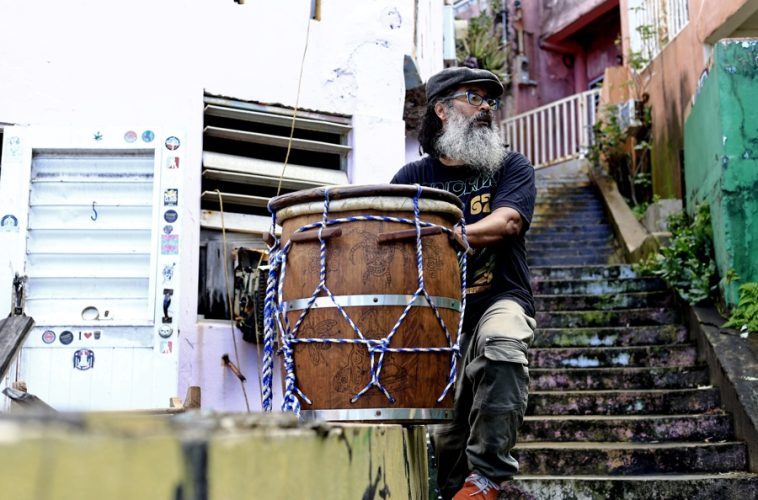
Similarly, Manny Vázquez conducts workshops to share the wisdom of Bomba barrel construction, knowledge instilled in him by Juan Fuentes during the coronavirus pandemic. From his workspace located beneath his home in the San Juan neighborhood of La Perla, he teaches the creation of this material culture, which comes to life by carving out a rum barrel and mounting goat hide using traditional iron rings.
“I started teaching others to build their own musical instruments because they are very expensive and not everyone has access to a local artisan,” says Vázquez. He is also a founder of the community batey at La Plaza del Negro, where dozens of people gather every Friday to dance and play Bomba along the La Perla boardwalk.

Preserving Traditional Construction
Edwin Maurás, 34, chose to focus on the torniquete (tourniquet) style to keep that specific method alive. In the 1950s and 60s, these and the cuña (wedge) styles were largely replaced by cáncamo (bolt-tuned) drums to facilitate easier international trade and tuning.
“The tourniquet style is the most common because of the ease of construction and tuning compared to the wedge style, which requires a much higher level of craftsmanship. I use modern materials to recreate this ancient type of drum,” says Maurás, who grew up in a family of artists.

Finally, the young artisan mentions that he is not alone; other young creators like “Weststockpr” are entering the field. However, he notes that while the craft is growing, there is still a notable absence of professional female artisans dedicated to the trade. EFE
ea/dmv/mcd
