




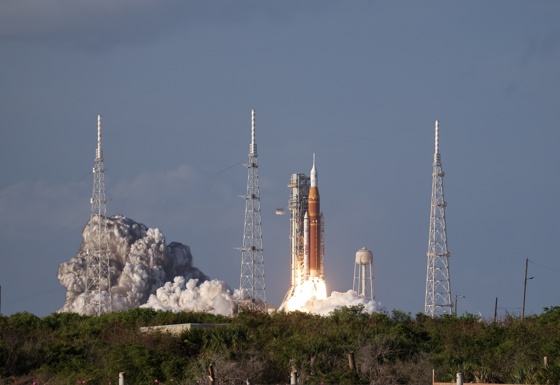
Astronauts of Artemis II back home!
Astronauts Splashdown was scheduled for 8:07 pm Eastern time in an area of about 2,000 nautical miles (3,704 kilometers) in the Pacific Ocean.
Miami, Florida, Apr 10 (EFE).- By Ivonne Malaver
The four astronauts who made history by reaching lunar orbit for the first time in over half a century faced the critical return to Earth on Friday, a maneuver as crucial as launch. The descent involves a drop at a velocity 45 times faster than that of a jet and temperatures that approach half that of the sun’s surface.
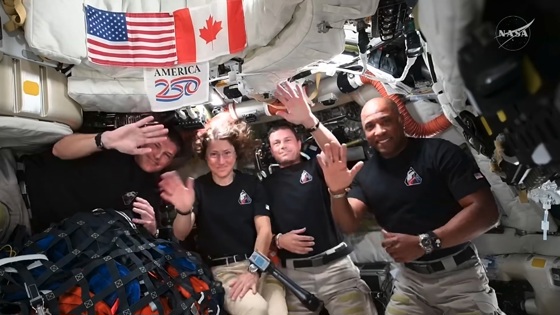

Splashdown was scheduled for 8:07 pm Eastern time in an area of about 2,000 nautical miles (3,704 kilometers) in the Pacific Ocean.
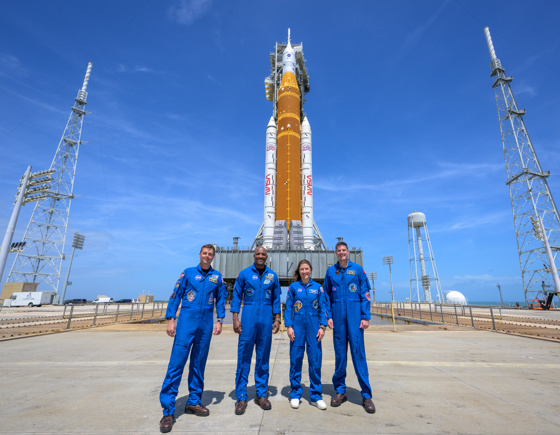
Aboard the Orion capsule, Reid Wiseman, Christina Koch, Victor Glover, and Jeremy Hansen will not only feel their weight multiply by four during the descent but will also face extreme heat, placing all their hopes on the heat shield, another main challenge for the Artemis II mission.
Following the more than eight minutes of high-risk launch, which Artemis II executed flawlessly on April 1st in Florida, NASA will brace on Friday a critical 13-minute re-entry period once the capsule hits the Earth’s atmosphere. This will culminate in Orion’s plunge a couple of hundred miles off the coast of San Diego, California.

Spanish engineer Carlos García-Galán, head of NASA’s Moon Base program, explained to EFE that the launch and ascent are the most high-risk maneuvers.
He stressed that this return will allow the capsule to reach the necessary speed to truly test the heat shield, which protects the astronauts from the “extremely high temperatures generated by friction with the atmosphere upon entering Earth.”
“We can only achieve that speed if we are coming from the Moon,” he added about the final phase of the ten-day mission, which orbited the natural satellite, without landing, and became the first crewed flight to reach lunar orbit since 1972.

NASA Administrator Jared Isaacman has stated he won’t rest until the four crew members are back with their families and affirmed he will be “thinking about the thermal protection systems.”
“I’ll be honest and say I’ve actually been thinking about re-entry since April 3, 2023, when we were assigned this mission,” expressed astronaut Glover. “And it’s kind of humorous, but it’s literal as well, that we have to get back.”
Phases before splashdown
Orion is drawn by Earth’s gravity in a free return trajectory, which ensures fuel efficiency.
Before entering the atmosphere, the capsule will separate from the service module 42 minutes before splashdown. At 75 miles (about 120 kilometers) above the Earth’s surface, a dozen thrusters will ensure it is correctly oriented.

This “fireball,” as Glover called it, will enter the Earth’s atmosphere at a speed of about 25,000 miles per hour (more than 40,230 kilometers per hour), decelerating at a rate of up to four times the force of gravity.
Testing Orion’s heat shield is crucial for protecting the capsule and its crew from temperatures around 5,000° Fahrenheit (2,760° Celsius).
Orion will deploy 11 parachutes in stages. Deployed at about 9,000 feet (2,700 meters) and traveling at 130 miles per hour (210 kilometers per hour), these will reduce the speed to less than 20 miles per hour (32 kilometers per hour).

After traveling some 400,000 nautical miles (over 740,000 kilometers), Orion will splash down and be recovered by the US Armed Forces. It will take between 30 and 45 minutes to recover the astronauts.
Lili Villarreal, Artemis Landing and Recovery Director, who hopes the recovery is as successful as that of the uncrewed Artemis I in 2022, said divers will be the first to approach Orion to assess the air and water around it and ensure it is safe for the four astronauts to exit.
They will help them board an inflatable platform, where two helicopters will pick them up and transport them to the sick bay on a ship. They will then undergo further medical checks on land before being flown to Houston, Texas. Meanwhile, Orion will be towed to the ship for its return to the Kennedy Space Center in Florida. EFE
ims/dmv/mcd