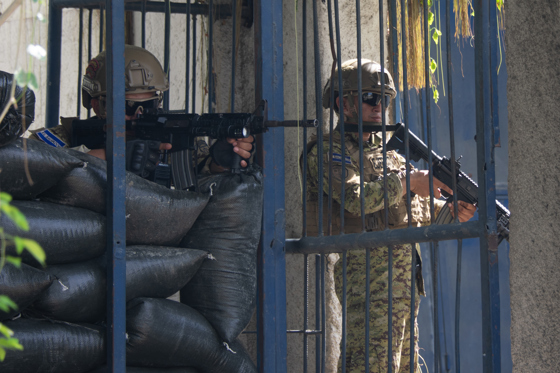
Two Salvadoran soldiers killed and others wounded!
San Salvador, Nov 20 (EFE).-
Two Salvadoran soldiers were killed and two others wounded while working with explosives at a camp in Haiti, the Salvadoran Armed Forces reported Friday. The two injured soldiers “are receiving medical care,” the Armed Forces said on X, without providing further details about the incident.

Over 2,000 Salvadoran military personnel are in Haiti to search for four soldiers from the Central American country who were ambushed and have been missing since Oct. 18, and whose whereabouts remain unknown. In this context, they have also supported operations against gangs and the recovery of territories.
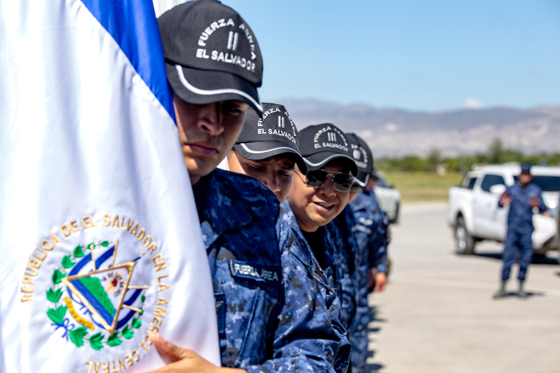
The Armed Forces expressed their “most sincere condolences” and solidarity with the families of the deceased.
“We stand with their loved ones during this difficult time,” the military institution added in its message.

This is the first incident involving deaths and injuries to affect Salvadoran forces since the contingent of 2,000 Salvadoran service members was deployed to Haiti.
El Salvador, which was already participating in the Gang Suppression Force (GSF), became more directly involved in the Haitian crisis following the October 18 ambush on the outskirts of the capital, Port-au-Prince, targeting a vehicle carrying four Salvadoran soldiers.

The Salvadoran contingent, which includes special forces, is the largest deployed in Haiti since the end of the United Nations Stabilization Mission in Haiti (MINUSTAH), which was on the island from 2004 to 2017.
Haiti is facing a complex security crisis in which five national and foreign forces are participating in operations against armed gangs that control large areas of Port-au-Prince and other parts of the Caribbean nation.

At least 4,595 people were killed, and another 2,050 were injured in Haiti between January and September 2026, amid an escalation of violence led by gangs that have adapted their strategies in response to the presence of international security forces, according to a recent report by the United Nations Office of the High Commissioner for Human Rights. EFE
sa/mcd