




Transparency Is the New Trust!
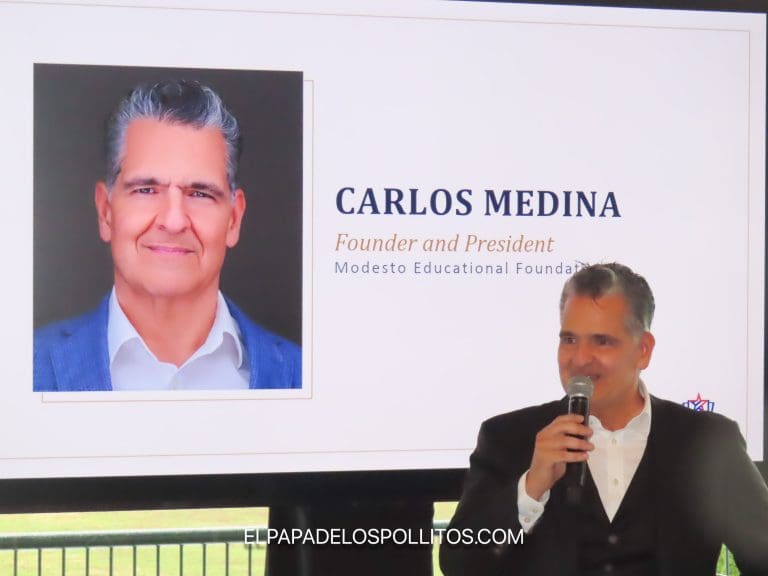
New Jersey.-By Carlos Medina
We are living through a crisis of trust.
Americans increasingly question their institutions. Confidence in government, media, corporations, nonprofits, and even community organizations has eroded. Social media amplifies outrage. Artificial intelligence can create convincing falsehoods. Information arrives instantly, but certainty often does not.

In such an environment, simply asking people to trust us is no longer enough.
Leadership today requires something more. It requires transparency.
As leaders, we often talk about integrity, ethics, and accountability. We tell people that our intentions are good and that our organizations are working for the public benefit. But good intentions alone do not create trust.
Trust is earned when people can see the evidence for themselves.
This is particularly important in the nonprofit sector, where organizations depend on the confidence of donors, volunteers, sponsors, and the communities they serve.

As the leader of a nonprofit organization, I regularly interact with business executives, public officials, philanthropists, and community leaders. Those relationships matter. They open doors, create opportunities, and often help build the partnerships necessary to accomplish meaningful work.
There is nothing inherently wrong with attending a fundraising gala, a sporting event, a reception, or another gathering where important conversations take place.
The real question is not whether leaders should attend these events.
The question is whether leaders should be willing to disclose them.
Transparency Requires Common Sense
Transparency also requires common sense.

Not every invitation or complimentary ticket represents a meaningful benefit.
Take elected officials. A mayor, legislator, governor, or other public official may be invited to a gala because the organization wants them to speak, present an award, recognize honorees, or simply be present. They may spend much of the evening working the room rather than enjoying themselves.
Allowing that official to bring a spouse or guest does not suddenly make the evening a lavish personal gift. In many cases, attending these events is part of the job.
The goal should not be to turn every dinner invitation into an ethics investigation.
That is very different from repeatedly receiving access to luxury hospitality worth thousands of dollars.
Imagine, for example, a nonprofit or community leader attending multiple World Cup events from a luxury suite where the access itself may be extremely valuable. That may still be entirely legitimate and may even help advance an organization’s mission.
But as the value and frequency of a benefit increase, so should our willingness to disclose it.

The same principle applies to journalism.
A journalist or publisher occasionally attending an event to cover it, develop sources, or understand the community is one thing. Routinely accepting expensive gala tickets for themselves and a guest from organizations or individuals they cover is another.
Again, that does not automatically mean anything improper has happened. But significant and repeated benefits can create the appearance of influence, and that is where transparency becomes important.
The challenge is recognizing when ordinary access becomes extraordinary privilege.

Too often, discussions about ethics focus exclusively on legality. We ask whether something is permitted under the rules. Yet legality and public confidence are not always the same thing.
The standard should not simply be:
“Can I accept this?”
The better question is:
“Would I be comfortable explaining this publicly to the people I serve?”
At a time when many small business owners are worrying about payroll, rent, rising costs, disruptions to their businesses, and whether they can keep their doors open, community leaders should be especially thoughtful about accepting privileges that many of the people they represent could never afford themselves.
That does not mean leaders must isolate themselves from influential circles. In fact, doing so would often make it harder to advocate effectively, raise funds, and advance worthwhile causes.
But participation should not come at the expense of transparency.
The challenge, of course, is that transparency is not always simple.
We all operate in gray areas. Organizations deal with confidential information. Donors value privacy. Leaders are human and sometimes make mistakes. Not every meeting, invitation, or interaction deserves public scrutiny.
So where do we draw the line?
For me, the answer lies in a principle of reasonable disclosure.
If a benefit, invitation, relationship, or opportunity is significant enough that a reasonable person might question whether it influenced my judgment, then it deserves either disclosure or reconsideration.
Transparency is not about perfection.
It is about removing unnecessary doubt.
At the Modesto Educational Foundation, we recently earned Candid’s Platinum Seal of Transparency. That recognition was not granted because we asked people to trust us. It was earned because we shared information, reported outcomes, established measurable goals, and demonstrated impact.

Trust is not built through promises.
Trust is built through evidence.
For nonprofits, that evidence may include reporting donations received and programs delivered.
For elected officials, it may include disclosing potential conflicts and sources of support.
For journalists, publishers, and media organizations, it may mean clearly distinguishing facts from opinions, explaining how stories are sourced, and disclosing relationships that could reasonably raise questions about their independence.
Different professions require different standards, but the underlying principle remains the same:
Show your work.
Too often, leaders expect trust because of their titles, positions, or accomplishments. Yet history teaches us that trust cannot be inherited.
It must be continually earned.
People do not trust organizations because they are large.
They trust organizations because they are transparent.
People do not trust leaders because they are charismatic.
They trust leaders because they are accountable.
People do not trust institutions because they claim to do good.
They trust institutions because they consistently demonstrate it.

Perhaps the greatest leadership challenge of our time is not raising money, growing memberships, or increasing influence.
It is earning credibility.
And credibility cannot be demanded.
It can only be earned.
In an age of skepticism, transparency is no longer a public relations strategy.
It is a leadership responsibility.
The answer is not asking people to trust us.
The answer is giving them reasons to.
