




Swiss Milk Chocolate 150 birthday!
Broc, Switzerland, Dec 5 (EFE).— By Antonio Brodo
Switzerland’s iconic milk chocolate, considered one of the country’s greatest inventions alongside the wristwatch and the Swiss Army knife, will mark its 150th anniversary in 2025. Created in 1875 by Swiss industrialist Daniel Peter, the product evolved into a global phenomenon while remaining a central symbol of Swiss identity.

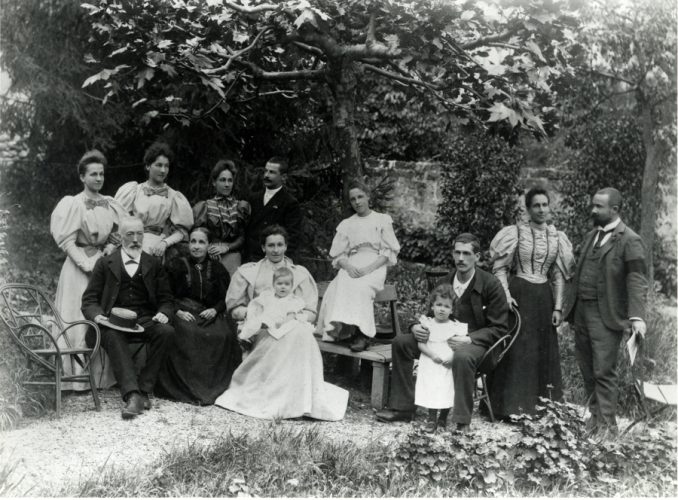

Peter began experimenting with milk and cocoa in Oct. 1875 in his factory in the lakeside town of Vevey, spending more than a decade refining the formula.
Before his breakthrough, chocolate in Europe was consumed mainly as a beverage, often mixed with water and spices.
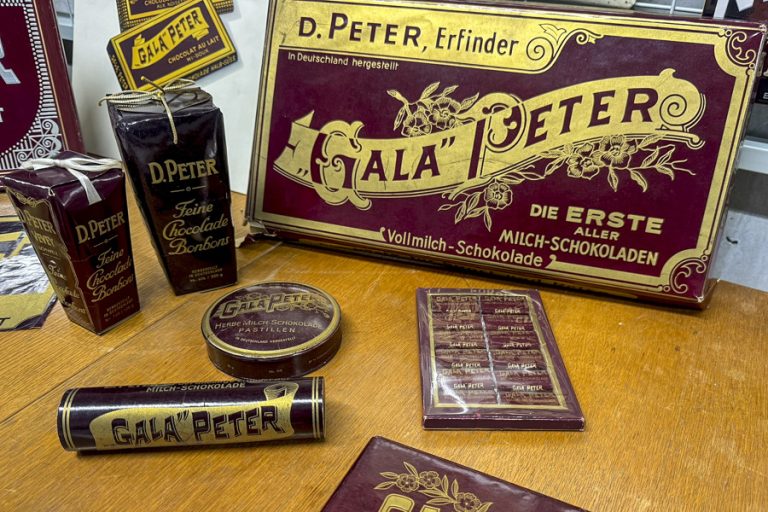
Milk chocolate was first commercialized under the name “Gala Peter,” “gala,” meaning milk in Greek, and quickly gained international attention.

It won awards at world expositions at the turn of the 20th century, helping solidify its reputation as a Swiss innovation during a period of rapid industrialization in food production.
The invention also changed the economics of chocolate.
According to Nestlé historian and archivist Lisane Lavanchy, “milk chocolate helped democratize cacao products,” making them more accessible because the tablets contained less expensive cocoa and more affordable milk and sugar.
“It was a flavor rapidly accepted by consumers, and competitors saw the potential immediately,” Lavanchy said.

Peter’s work was soon imitated by major Swiss manufacturers, including the Cailler family, who later became both business and family partners after Peter married the founder’s daughter.
Nestlé opens archives to reveal the original experiments
To mark the anniversary, food giant Nestlé, whose founder Henry Nestlé ran a factory next to Peter’s in Vevey, has opened its historical archives to EFE. The company acquired Peter’s business, along with others, in the early 20th century.

Nestlé’s archive preserves Peter’s original notebook, where he recorded formulas and results starting in 1875.
One of Peter’s main challenges was the difficulty of mixing fatty cocoa with liquid milk.
“Since 1830, cocoa could be defatted, allowing it to be made into bars,” Lavanchy explained. “But adding liquid created consistency problems. Much of Peter’s research focused on removing as much water as possible from the milk so the mixture would stabilize.”
Initially, Peter used condensed milk, a US invention that had gained popularity in Europe.
Lavanchy suggests that Henry Nestlé’s pioneering work with powdered milk and infant cereal may have inspired Peter to explore new dairy combinations.

A Swiss cultural symbol and global export
By the early 20th century, milk chocolate had become Switzerland’s second-largest food export after cheese.
Today, it remains deeply tied to the country’s identity, famously associated with Alpine landscapes, cows and traditional craftsmanship.
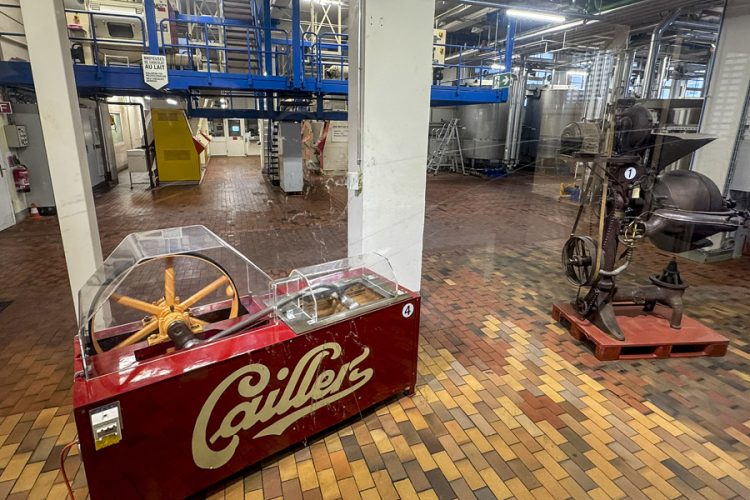
Cailler, the world’s oldest chocolate brand still in operation, founded in 1819, celebrates Peter’s legacy in its popular factory-museum in Broc, which receives around 1.2 million visitors a year.
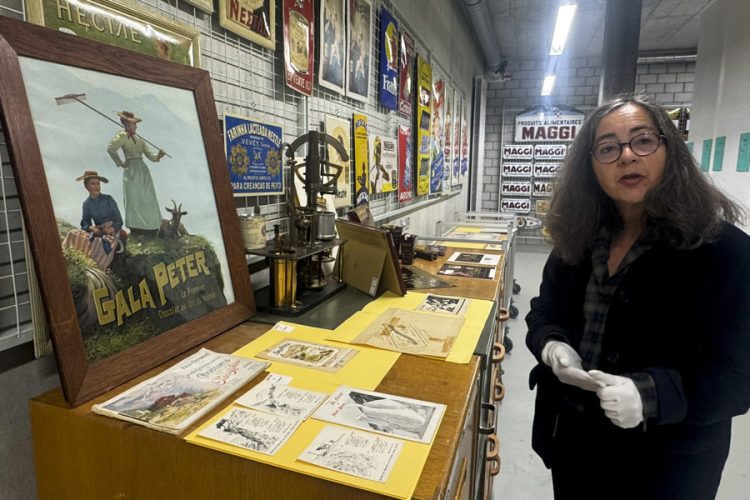
The museum will open a special exhibition in 2025 honoring the inventor.
“This anniversary is a very important milestone for us, and we really wanted to pay tribute to Peter,” said the institution’s director, Fleur Helmig.
“Almost the entire image of Switzerland is connected to chocolate: the mountains, the Alps, the cows, everything remains in people’s imagination.” EFE abc/seo

