





The State We’re In column by Alison Mitchell, Executive Director, New Jersey Conservation Foundation.
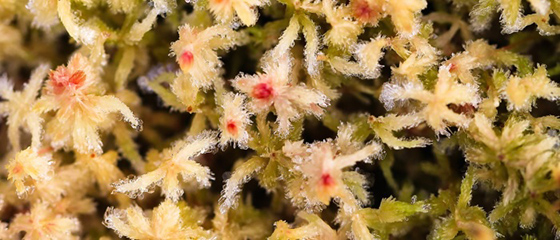
An ancient and quiet world lies at your feet whenever you walk through a forest or wetland in New Jersey. Mosses, part of the broader group known as bryophytes (which include liverworts and hornworts), form soft green carpets on rocks and tree trunks. With more than 10,000 species worldwide, they are among the planet’s oldest land plants. Yet despite their wide range and ecological importance, they remain one of the most overlooked components of our natural landscapes.

New Jersey hosts a remarkable diversity of these miniature masterpieces, including granite mosses like Andreaea, peat mosses such as Sphagnum, and the vast array of so-called “true mosses.” These groups occupy an extraordinary range of habitats: rock outcrops, fens, wetlands, forests, floodplains, streambanks, and even disturbed environments like roadsides and rooftops. Some grow submerged in aquatic systems, while others cling to dry, rocky slopes.

Although we find mosses in many places, specific types are quite picky, needing very specific surfaces to survive. These precise habitat preferences make mosses extraordinarily sensitive to environmental changes and therefore incredibly valuable as ecological indicators.
In New Jersey, more than 100 of our roughly 400 rare and vulnerable plants are moss species, and they are imperiled. Scorpidium revolvens and Discelium nudum, for example, are tied to highly specific environments that are themselves under pressure from habitat loss and climate change. When these mosses decline, it signals the loss of a species and the degradation of the wider ecosystem.

Mosses help regulate our natural world. They serve as a living monitoring system, and a shift in moss communities can provide early warning of hydrological changes long before they become obvious. Peat mosses like Sphagnum are especially important as they build and expand wetlands, hold large amounts of water, and influence acidity. A Pine Barrens wetland system may contain over 20 species of Sphagnum! Without them, we lose vital processes that can improve water quality and store carbon.

Despite their importance, mosses remain largely absent from policy discussions and conservation planning. Protecting them requires paying attention to the land under our feet. When we conserve wetlands, we’re also protecting peat-forming mosses that help sustain them. When we manage forests or assess ecosystem health, mosses are an important piece of the puzzle.

People have long been captivated by moss, from fiction writers dreaming up fairy forests to scientists. Famed Indigenous botanist Robin Wall Kimmerer noted in her 2003 award-winning book Gathering Moss: A Natural and Cultural History of Mosses that there is more living carbon in Sphagnum moss than in any other single genus on the planet. She writes in her love letter to moss: “Who knows how it happened, the migration from the easy life in the water to the rigors of the land? Maybe the pools dried up, leaving algae stranded on the bottom like fish out of water. Maybe algae colonized the shady crevices of the rocky shore. Fossils record successful outcomes and rarely preserve the process. But we do know that during the Devonian era, 350 million years ago, the most primitive land plants ever seen emerged from the water to try and make a living on the land. These pioneers were the mosses.”

This living network of tiny plants around us is part of a many-million-year-old lineage that traces back to the inception of life on land. Reconnecting into this long story of life on Earth should help us understand and protect the interrelationships among the many players, including the outsized role played by the mighty moss.
To learn about preserving New Jersey’s land and natural resources, visit the New Jersey Conservation Foundation website at www.njconservation.org or contact me at info@njconservation.org.


![[FILE] British actor John Rhys-Davies speaks during the shooting of a scene of the film Ice Age 2 at the 86th Szolnok Helicopter Base in Szolnok, 100 kms southeast of Budapest, Hungary, 09 November 2012. EFE-EPA/JANOS BUGANY](/wp-content/uploads/2025/11/John-Ryhs.jpeg "Almería, Land of Cinema’ Award!")
, form soft green carpets on rocks and tree trunks.)