




Regionalism” guided by pragmatism!
Panama City, Jan 28 (EFE).- By Giovanna Ferullo Mena
Latin America and the Caribbean, a “region that has everything but lacks much,” must now “stop managing failure” and work toward a “possible regionalism” guided by pragmatism. This step is vital for confronting the new world order, regional heads of state and government affirmed Wednesday at a meeting in Panama.

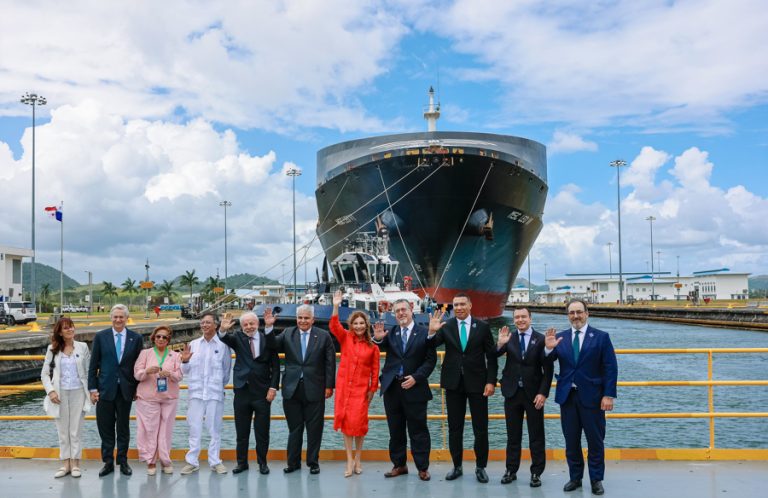
This was the central message delivered by the presidents of Panama, Brazil, Bolivia, Colombia, Ecuador, Guatemala, Jamaica, and Chile during the inauguration of the second International Economic Forum Latin America and the Caribbean, organized by the regional development bank CAF.
Unity beyond ideologies
With 615 million inhabitants, and marked by high inequality and low productivity, Latin America and the Caribbean must overcome fragmentation fueled by ideological positions, the leaders stated. Instead, the region must advance toward coordination to improve the lives of its citizens and become a relevant global player with an audible voice.

Brazilian President Luiz Inácio Lula da Silva, criticized the region for allowing “ideological disputes” to prevail. He called doctrines like Bolivarianism “insufficient” and the European Union model “unviable” in the Americas, advocating for a “possible regionalism” focused on fighting poverty and inequality.
“Governments of all stripes have failed, and this is transversal (…) the time has come to cross borders, not just ideological ones, but also national,” said Chile’s right-wing president-elect, José Antonio Kast, who called for a “durable, effective, and straightforward cooperation” to overcome the current situation.

New world order
The world is “seeking a new international order, moving away from idealism and closer to realistic diplomacy,” said Panamanian President José Raúl Mulino. He warned of a scenario where “the de facto power of each country is imposed,” which “breaks the balance given the immense existing asymmetries.”
“We are part of a strategic region, a food producer with water reserves, the greatest biodiversity, and an abundance of minerals and renewable resources,” Mulino stressed. In this context, he urged the region to “form a single bloc, as this is the only way it will have negotiating power and concrete power against possible threats.”

In a world marked by uncertainty, “we need to resort to dialogue to understand and guide the transformations,” highlighted Guatemalan President Bernardo Arévalo.
“Latin America, must make the decision to participate and be part of the command and the geopolitical and geoeconomic forces for worldwide transformation. Let’s make the decisions; that is what must be done,” added Bolivian President Rodrigo Paz.

Growth potential
“South America and the Caribbean have four times more potential to develop clean energy than the whole demand of the US in a year,” said Colombian President Gustavo Petro.
“Vulnerability is not our destiny. Our region possesses what the world needs, and increasingly so,” said Jamaican Prime Minister Andrew Holness, who urged the region to deepen economic ties and present itself to the world as “a coherent hemisphere.”

Ecuadorian President Daniel Noboa affirmed that, if countries work together, Latin America could grow close to 5%, exceeding the predictions of the International Monetary Fund (IMF).
Highlighting the immense renewable energy capacity of the region, Colombian President Gustavo Petro asserted: “South America and the Caribbean have four times more clean energy potential than the annual energy demand of the United States.” He then presented his vision for a “fundamental pact for life and freedom in the Americas.”EFE

gf/dmv/mcd
