



Peru votes for 9th President in 10 years!
Voting will close at 5pm local time, after which the counting of votes will begin and the process is expected to take several days before conclusive results are out.
Lima, Apr 12 (EFE).-
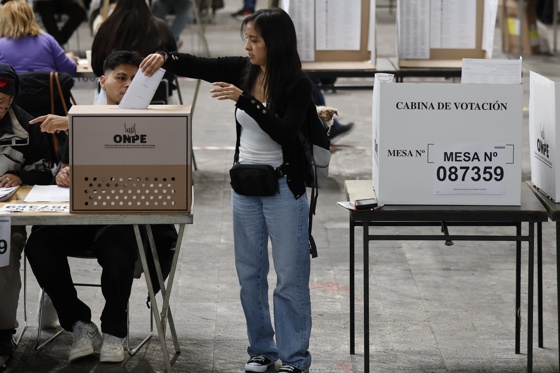
Voting began Sunday in Peru in a general election to choose the country’s representatives for the 2026-2031 period, with a record 35 candidates running for president amid a decade of political instability which has seen heads of state in the last ten years.
Polling stations opened at 7am local time for its 27.3 million voters, of whom 1.2 million are living abroad.

Voting will close at 5pm local time, after which the counting of votes will begin and the process is expected to take several days before conclusive results are out.
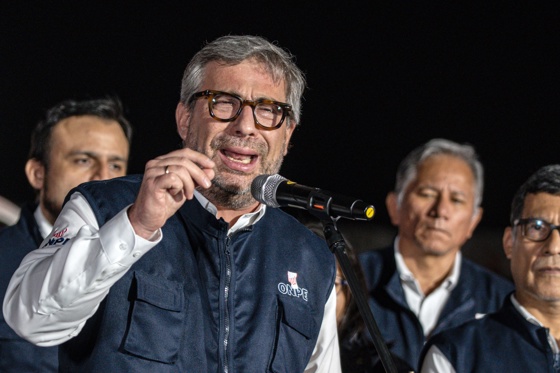
Besides the president, Peruvians also vote to select its members of the Senate, Chamber of Deputies and local representatives.
With 35 candidates vying for the presidency, all polls predict a runoff between the two most voted aspirants.

Among the top contenders for the runoffs is the right-wing Keiko Fujimori (Popular Force), daughter and political heir of former President Alberto Fujimori (1990-2000) and a presidential contender in the three previous elections.
Other frontrunners are the populist Ricardo Belmont (Obras Civic Party), an 80-year-old businessman and former mayor of Lima (1990-1995); and the ultra-conservative businessman Rafael Lopez Aliaga (Popular Renewal), also former mayor of the Peruvian capital (2023-2025) and with a style similar to that of United States President Donald Trump; and comedian Carlos Alvarez (Country For All).

These elections will also mark Peru’s return to a bicameral parliament – 60 senators and 130 deputies – after more than 30 years, even though Peruvians voted against it in a referendum in 2018.
The elections will be followed by a total of 487 foreign observers, including from the European Union (EU) and the Organization of American States (OAS).
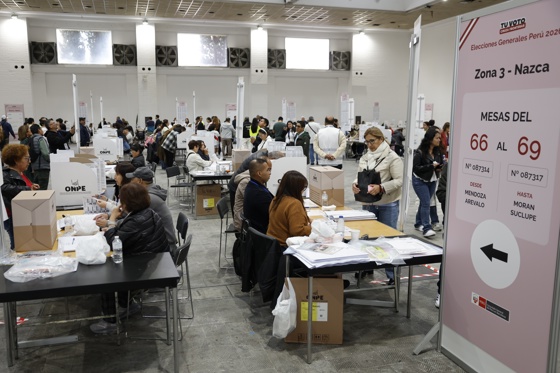

In Peru, voting is mandatory for people between the ages of 18 and 64, and non compliance can result in a fine ranging from 27.50 to 110 soles (between $8.16 – $32.65) depending on the economic condition of the voter.
One of the main developments in these elections, following the allegations of “fraud” without evidence made in the previous election by Fujimori, is that the ballots will be guarded until the proclamation of results, so that they can be counted in case of similar allegations. EFE
fgg/sc