




More mental health and social-emotional skills to curb the rise in youth suicides.
Panama City, June 30 (EFE)
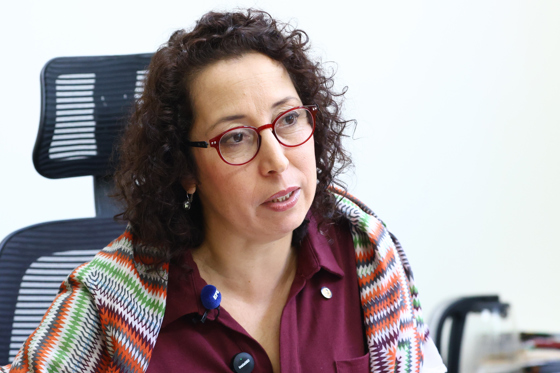
Suicide among adolescents and young adults is on the rise in the Americas, driven by multiple factors – from depression to excessive exposure to social media – that can be prevented by promoting mental health and socio-emotional skills, among other things, an advisor from the Pan American Health Organization (PAHO) in Panama told EFE.

A study from Lancet Regional Health – Americas, published by PAHO last May, revealed that the suicide rate among people aged 10 to 24 years rose 38% in the last two decades, remaining the third leading cause of death for this group.
In the region, 18,157 adolescents and young adults died by suicide in 2021, according to the report, developed with data from the World Health Organization’s (WHO) Global Health Estimates of 35 countries between that year and 2000.
According to the study, the fastest increases in suicide rates occurred among girls and in the 10-14 age group.

The 56th General Assembly of the Organization of American States (OAS), which met this month in Panama, urged the region to “intensify efforts” to address the rise in suicides, in a resolution that also called for addressing “the growing damage to mental health associated with digital environments.”
“Suicide affects individuals, families, and communities, but it can be prevented,” Dr. Zohra Abaakouk, PAHO’s International Advisor on Non-Communicable Diseases and Determinants of Health in Panama, told EFE.
An urgent public health problem
The PAHO recognizes that the upward trend in suicide among young people aged 10 to 14 poses an urgent public health concern.
This explains why children and adolescents may be excessively exposed to digital environments and cyberbullying, which are factors associated with this increase in suicides, along with mental health problems such as depression and anxiety – which are appearing at increasingly younger ages – substance use, social pressure, and easy access to lethal means.
“We know that bullying, which used to happen during the school bus ride, now continues even at home” because of electronic media and networks, the expert says in relation to cases of bullying.
Bullying and cyberbullying can be tackled from several angles, one of them being regulatory frameworks, as Australia did, where access to networks was banned for those under 16.
Promoting legal frameworks of varying scope “is fundamental and forms part of the measures that must be considered” to guarantee safe spaces for children and adolescents, Abaakouk stated.

Mental health and social-emotional skills
Just as the cause of suicide is multifactorial, its approach must also be multifactorial.
“We know that it is necessary to strengthen children’s socio-emotional skills from an early age, 3-4 years old, to promote emotional management and peaceful conflict resolution. It is also essential to implement mental health programs in schools, with very clear protocols, to detect and address cases of bullying, and to treat anxiety and depression,” said the PAHO advisor.
It is essential to train teachers, parents, and health professionals to identify warning signs of potential suicidal behavior, “such as isolation, sudden changes in behavior, expressions of sadness, aggression, self-harm, and expressions of hopelessness, which should never be ignored,” warns Abaakouk.
“We know that interventions are required from a comprehensive approach focused on early prevention, and we know that early interventions, family, school and community support, as well as an open conversation about mental health can save lives,” the expert asserts.

Taking care of mental health doesn’t necessarily mean going to a psychologist; it also means having a support network—a parent, a sibling, a friend, a neighbor to talk to, the doctor commented.
