




Latinos rely on Food banks!
City of Industry, US, Dec 23 (EFE). —
Thousands of Latino families across the United States are turning to food banks this Christmas as persistent inflation squeezes household budgets, eroding purchasing power and forcing even retirees and working families to seek emergency food assistance.
Long before dawn, Joe Nino, a retired senior, lines up outside MEND (Meet Each Need with Dignity), a poverty relief center in Pacoima, Los Angeles, hoping to secure food distributed twice a week.

“The economic situation is very hard,” Nino told EFE. “I take food home for myself and for families who don’t have a good financial situation.”
Lines grow before sunrise
Nino often waits for hours in lines that can serve up to 600 people in a single day, a number that increases during the holiday season.
Victoria Hernández, who has lived in the US for 50 years, is also a regular. Retired for six years, she says her Social Security income is no longer enough to cover basic expenses.

“What we receive from Social Security is not enough,” Hernández said. “Food and rent — it’s very difficult.”
Scenes like these stand in stark contrast to the traditional image of Christmas abundance, particularly in Latino communities disproportionately affected by rising living costs.
Hunger on the rise
According to the latest report from Feeding America, the nation’s largest food bank network, food insecurity now affects 47 million people nationwide, including 14 million Latinos.

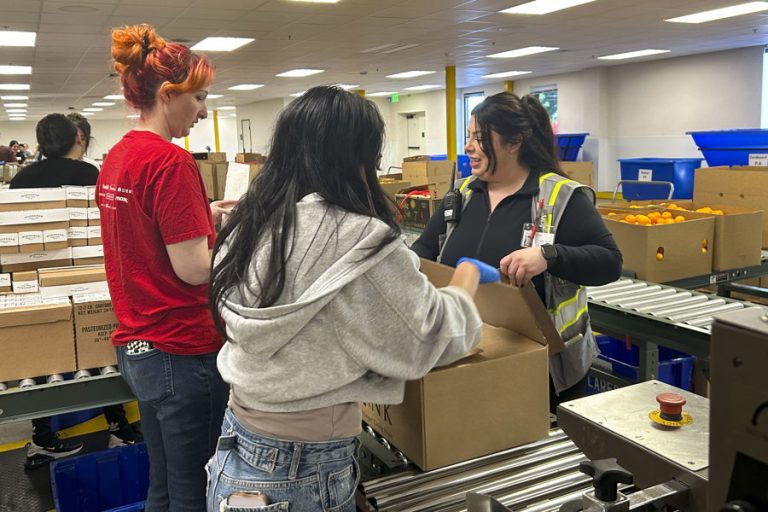
At the center of the crisis is the Los Angeles Regional Food Bank, which feeds about 1.2 million people each month in a metropolitan area of roughly 9 million residents, despite being one of the wealthiest regions in the country.
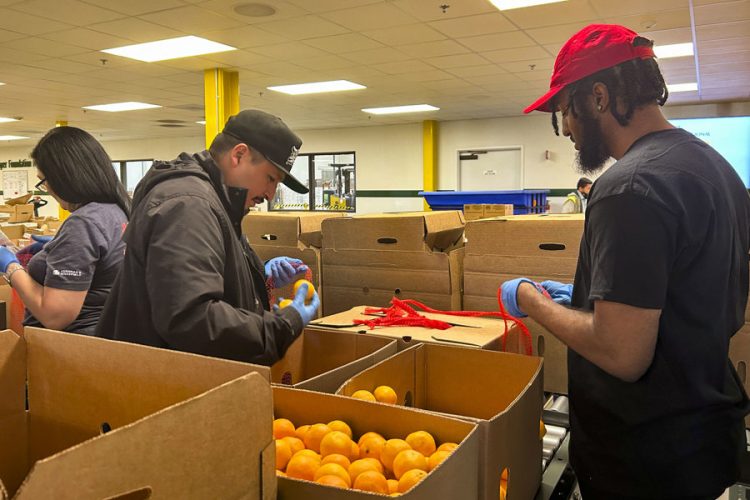
“What used to cost 25dollars now costs 35 dollars or 40 dollars,” said Christina Quesada, the food bank’s director of corporate relations. “That’s a roughly 60% increase due to inflation over recent months.”
Although the Consumer Price Index eased to 2.7% in November, the cumulative impact of rising prices continues to strain households, including those with stable employment.

“We call them the ‘working poor,’” Quesada said. “They have jobs, but their income isn’t enough to live on.”
She added that anxiety and desperation over feeding families have become increasingly common among households that until recently considered themselves economically secure.
Community solidarity
The crisis has been felt acutely in predominantly Latino cities such as Paramount, where about 80% of residents are of Hispanic origin.
The community is still marked by memories of immigration raids that sparked massive protests in Los Angeles last June.

As Christmas approaches, grassroots initiatives are seeking to ease the strain. One such effort is the “Season of Giving” campaign by grocery chain Grocery Outlet, led locally by Lourdes García and Paul de la O.
The campaign aims to provide three million meals by Dec. 31 through customer donations and checkout-rounding programs.
In Paramount, residents have rallied around these initiatives, building informal safety nets to support one another amid rising prices and shrinking margins in a system many feel has left them behind. EFE

mvg/seo
