


Rio de Janeiro, Feb 15 (EFE).-
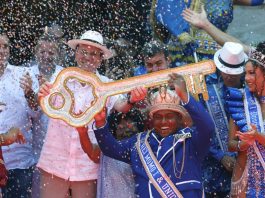
The parades of the samba schools at the Sambadrome, the biggest attraction of the Rio de Janeiro carnival, kicked off on Sunday with a controversial tribute by the Acadêmicos de Niterói school to Brazilian President Luiz Inácio Lula da Silva.
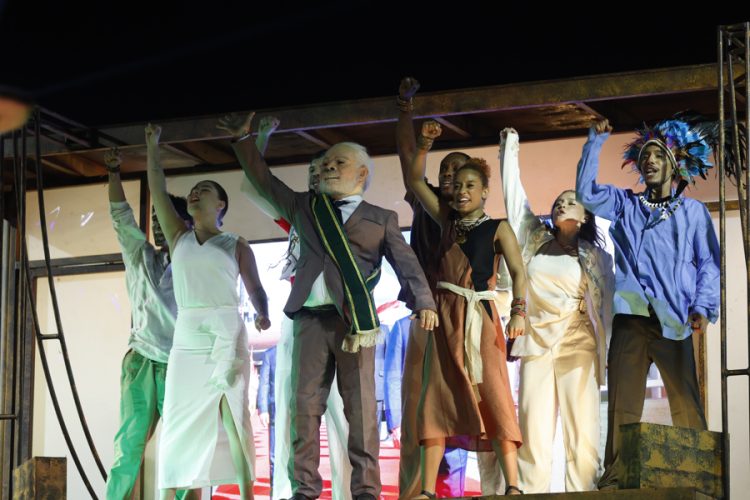

In the first parade on Sunday, the debutant school in the special group of the Rio de Janeiro carnival reviewed the life of the progressive leader, from his birth in the impoverished Brazilian northeast and the difficulties he faced in childhood to his consolidation as a union leader and his election as the first workers’ president of Brazil.
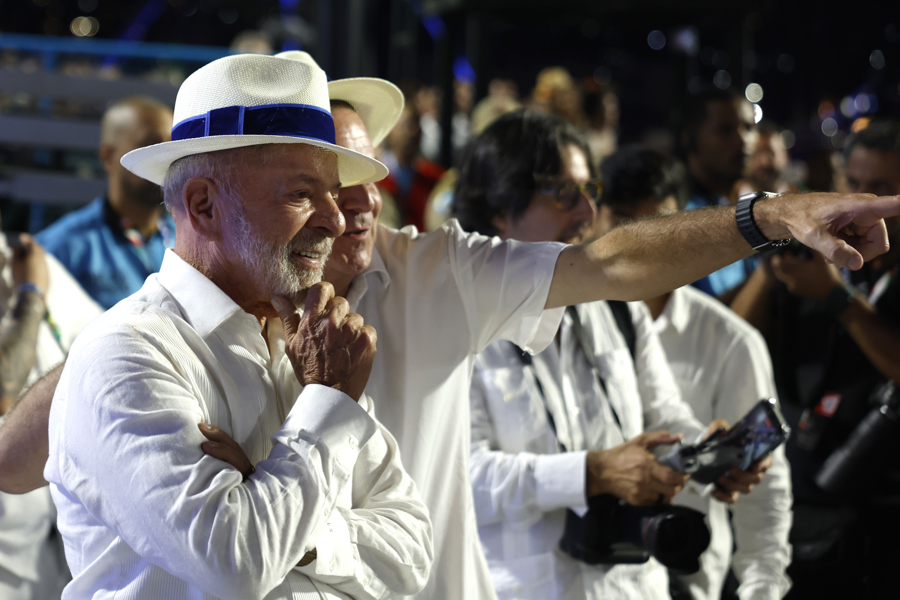
The tribute, with thousands of dancers and musicians showing different aspects of the president’s life, was attended by a very discreet Lula from the box of Rio de Janeiro city hall box, accompanied by seven ministers and numerous politicians.
The presentation was the subject of controversy since before the carnival because it comes only seven months before the elections in which the president will seek a fourth term.

The opposition denounced it as early electoral propaganda by a group that receives public resources, but the justice system refused to ban the parade, although the Electoral Tribunal made it clear that it could be the subject of an investigation.
The government banned the participation of ministers and senior officials in the parade, as well as called for caution, fearing that Lula, represented in the parade by an 18-meter statue, could be fined, sanctioned or even disqualified.
These fears led the first lady, Rosângela Lula da Silva, who was to appear on the last float of the parade, to desist from participating at the last minute.

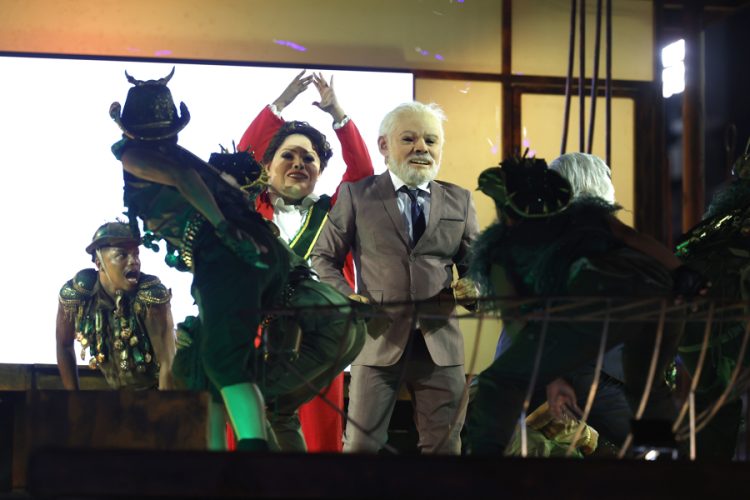
Even before the dancers and musicians began to parade, the audience began to chant in the stands “Olé, olé, olá, Lula, Lula”, an old campaign slogan of the politician, and, with flags and posters, made their preference clear.

The parade began with giant screens showing scenes from Lula’s political life and a depiction of his mother, ‘Doña Lindú’, fleeing with her children to the industrialized state of Sao Paulo.
The commission in charge of presenting the parade staged President Michel Temer stealing the presidential sash, in an allusion to the dismissal of Dilma Rousseff, Lula’s successor, to hand it over to a clown representing the far-right Jair Bolsonaro, until the progressive leader appears to recover it and be able to climb again the ramp of the Palácio do Planalto.
One of the most cheered groups of dancers was composed of relatives of victims of the Brazilian dictatorship, cited in the samba of the parade.

A float entitled “no false myths, no amnesty” was also cheered, a clear allusion to Bolsonaro, Lula’s biggest political rival, convicted and imprisoned for coup d’état and whose allies in Congress are trying to benefit from an amnesty.
“Our intention was not electoral. We chose Lula as the theme because it is a winning story. Brazilians like the story of people who rise from the bottom and win. We brought to the sambadrome the story of a person who won,” the scriptwriter of the parade, Igor Ricardo, told EFE.

The scriptwriter attributed the criticism to the nervousness of the far-right and insisted that the school’s intention was not to campaign.
“We are not asking for votes for Lula. We are simply narrating his life, but we cannot tell his story without talking about politics,” said Ricardo, who said that the president came to tears when he was told details of the project and the samba composed for the parade.

The parades of the 12 samba schools of the Rio de Janeiro Special Group, which continue on Monday and Tuesday nights, are the biggest attraction of Brazil’s carnival and considered the world’s greatest outdoor spectacle. EFE
cm/pd