





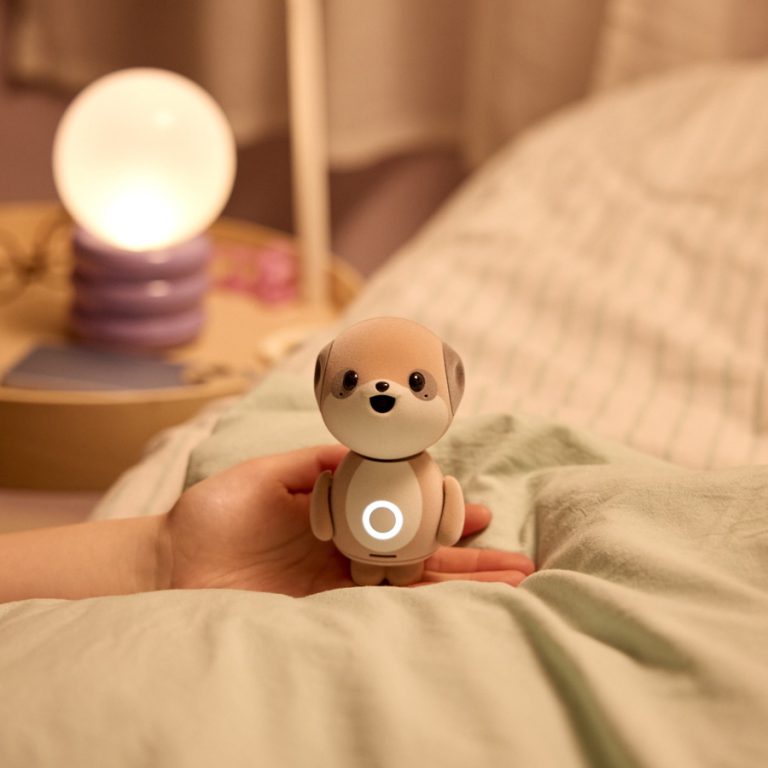
Japan’s Sharp Poketomo Robot!
Tokyo, Dec 5 (EFE).-
Japan’s Sharp Corp. released its new Poketomo robot on Friday — a tiny AI-driven meerkat-inspired companion — hoping to tap into the growing nuikatsu craze, the popular trend of photographing plush toys during trips, at restaurants or in any social-media-worthy setting.
In Sharp’s promotional video, the 12-centimeter-tall robot is shown as a woman photographs it in a café, illustrating the nuikatsu lifestyle, literally “activities with plush toys,” which has surged in popularity across Japan.

Poketomo can recognize its owner’s face and voice, and it learns personal details over time so it can hold conversations about daily life, according to the company.
The new device follows products like Moflin, a small AI “pet” shaped like a furry guinea pig with what developer Vanguard Industries describes as “independent emotions.” (Although marketed by Casio in some regions, Moflin’s original developer is Vanguard; the quote “independent emotions” appears in Vanguard’s official product description.)

Both Poketomo and Moflin illustrate the strength of nuikatsu: annual plush-toy sales reach about 45 billion yen (roughly $290 million), boosted in part by reduced physical contact during the COVID-19 pandemic, according to a recent column in Japan’s Asahi newspaper.
They also highlight Japan’s push into physical AI, an area that has expanded rapidly during a year in which AI-related companies have driven unprecedented gains on the Tokyo Stock Exchange.

Physical AI aims to give machines — such as robots or vehicles — the ability to perceive and interact with real-world environments in real time through cameras, sensors and radar, allowing them to understand and respond to human commands.
Many Japan-developed products are designed to provide companionship or care for an increasingly aging and isolated population amid persistently low birth rates.

According to data published this year by Japan’s Ministry of Health, Labor and Welfare, 39.9% of Japanese people say they feel lonely, and single-person households are on track to become the most common living arrangement in the country. EFE
jdg/lds
