



Free Flu Shot Season in New Jersey!
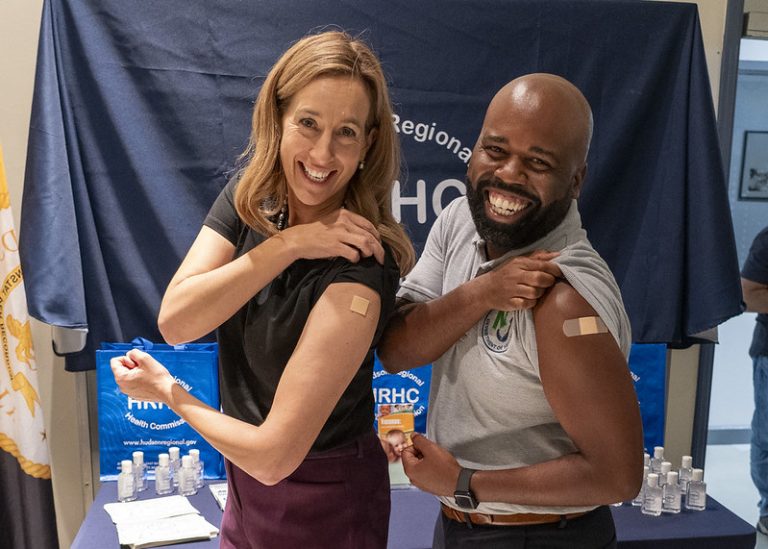
Governor Sherrill and Health Commissioner Washington receive their annual flu shots and encourage residents to protect themselves during respiratory virus season.
It is recommended that all people 6 months of age and older receive up-to-date influenza and COVID-19 vaccines.
BAYONNE –
Governor Mikie Sherrill and Health Commissioner Dr. Raynard Washington joined residents of the Hudson Regional Health Commission’s Vaccine Clinic for Children (VFC) at the Bayonne Public Library yesterday to receive their 2026–2027 flu shots. Their visit to the vaccination clinic comes at the start of fall and winter respiratory virus season, when influenza, COVID-19, and respiratory syncytial virus (RSV) typically begin circulating more widely. Flu activity in New Jersey is currently low, but higher than at this time last year.

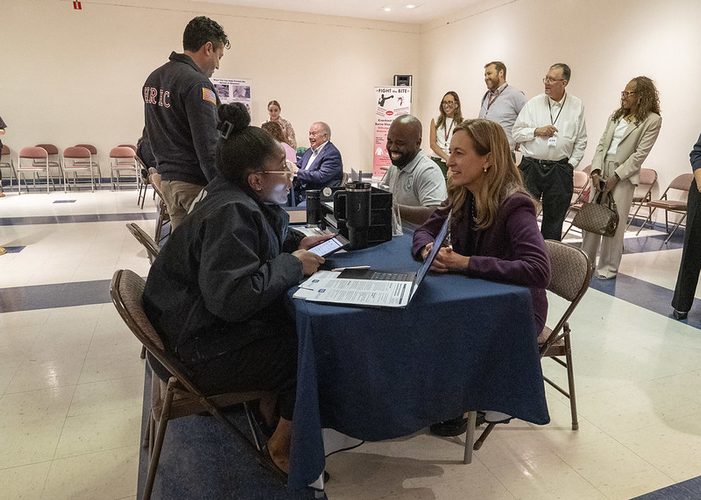
“Staying up to date on your vaccinations is one of the easiest and most effective ways to prevent you and your loved ones from becoming seriously ill,” said Governor Sherrill . “I encourage all New Jerseyans to make sure they are protected by making a plan to get their vaccinations this season.” “Getting a flu shot only takes a few minutes, and it’s one of the simplest things any of us can do to protect ourselves, our families, and our neighbors this season,” Commissioner Washington said . “If you haven’t yet received your flu shot, now is a great time to talk to your doctor, stop by your local pharmacy, or find a nearby community clinic.” The New Jersey Department of Health (NJDOH) continues to encourage everyone to stay up to date on all their vaccinations—including the annual flu vaccine, the COVID-19 vaccine, and the RSV vaccine, if eligible—as the best way to stay healthy and avoid serious illness and hospitalization. Washing your hands regularly, covering your mouth when coughing, and staying home when sick are also important strategies for reducing the spread of respiratory viruses. The vaccination was organized by the Hudson Regional Health Commission (HRHC) and Hackensack Meridian Health
(HMH).
Facilitating vaccination in New Jersey
Yesterday’s event builds on recent state actions to ensure that every person living in New Jersey who wants a vaccine can receive one:
COVID-19 vaccines for people 6 months and older. On September 29, the New Jersey Department of Health (NJDOH) issued Executive Directive 26-002 , recommending the COVID-19 vaccine for anyone 6 months and older for the 2026–2027 respiratory virus season.
A prescription is not required at the pharmacy. The NJDOH also issued a Standing Order allowing pharmacy professionals in New Jersey to administer COVID-19 vaccines to anyone 3 years of age or older without a prescription.
Immunization schedules based on scientific information for people of all ages. Through Executive Directive 26-003 , the NJDOH adopted the American Academy of Pediatrics’ 2026 schedule of childhood and adolescent immunizations and the American Academy of Family Physicians’ 2026 schedule of adult immunizations. Under state law, the Commissioner’s recommendations regulate cost-sharing coverage between state-regulated health insurers and health benefit plans. This includes recommending measles vaccination at a time when significant outbreaks are occurring in neighboring states.
“Stay well, learn well.” In August, NJDOH launched this statewide campaign with hospital systems, local health departments, and federally qualified health centers to bring vaccinations, physicals, and health screenings to communities. The free community health events continue through October and are listed on the Community Calendar .

Regional collaboration. In September, the Northeast Public Health Collaborative endorsed the 2026–2027 respiratory vaccine recommendations of the nation’s leading medical organizations and highlighted SpreadTheFacts.org , an evidence-based resource for patients and providers developed by the American Medical Association with the Vaccine Integrity Project. New Jersey is a founding member of the collaboration and also participates in the Governor’s Public Health Alliance to share best practices that address the threats of communicable diseases across state lines.

Investing in access to vaccines. Governor Sherrill’s final budget for fiscal year 2027 includes $3 million for the state’s vaccination program.
Who should get vaccinated this season?
Fall and winter typically bring more respiratory illnesses to New Jersey. Staying up to date on your vaccinations helps protect you against serious illnesses and hospitalizations. NJDOH recommends: Influenza or Flu: Annual flu vaccine for everyone 6 months and older. Adults 65 years and older should get a high-dose flu vaccine when possible. Pregnant women and immunocompromised individuals should not receive the nasal spray version.COVID-19: Updated vaccine for all children 6 to 23 months; children 2 to 18 years in certain risk groups or if desired; all adults 19 to 64 years; pregnant women; immunocompromised individuals 6 months and older; and healthcare workers. Adults 65 years and older should receive the updated vaccine and a second dose six months later.
RSV: Protection for infants under 8 months of age who were not protected by maternal vaccination, and for children 8 to 19 months of age in certain risk groups. A single RSV vaccination is recommended during the first eligible pregnancy between 32 and 36 weeks (administered between September 1 and March 1), for adults 50 to 74 years of age at increased risk, for all adults 75 years of age and older, and for immunocompromised adults 18 years of age and older.

Updated flu and COVID-19 vaccines can be given during the same visit, along with the RSV vaccine for those who are eligible. Residents should talk to their healthcare provider about which vaccines are right for them, and vaccination decisions can be individualized. Residents who are ready to receive one dose now and want to wait for the other—for example, because they recently had COVID-19, don’t tolerate the vaccine well, or simply don’t like needles—can do so. Protection against one virus is better than no protection at all. Where to get vaccinated and how to pay? Vaccines are available at healthcare provider offices, pharmacies, community clinics, and local health departments. Free community vaccination events are listed on the NJDOH Community Calendar.

Recommended vaccines are covered by most health insurance plans. Parents who need help paying for vaccines can ask their child’s healthcare provider about the Vaccines for Children program, which provides free vaccines to eligible children up to age 18 who are Medicaid eligible, uninsured, underinsured, or Native American/Alaska Native. Adults without health insurance, or whose insurance does not cover certain vaccines, can contact their local health department or a federally qualified health center to see if they qualify for free or low-cost vaccines through the 317-funded program . More information about vaccines in New Jersey is available at nj.gov/health/vaccines.

# # #
The New Jersey Department of Health is a nationally accredited health department working to ensure that all New Jerseyans live long, healthy lives and reach their full potential. With more than 6,000 employees, the Department works to protect public health, promote healthy communities, and continue improving the quality of health care in New Jersey.