




Petro Willing to Meet Noboa!
Bogotá, Jan 24 (EFE).-
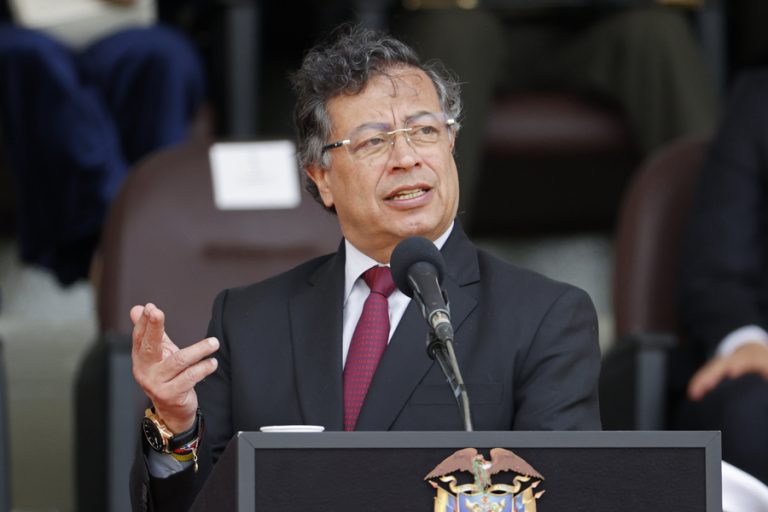
Colombian President Gustavo Petro expressed his willingness on Saturday to meet with his Ecuadorian counterpart, Daniel Noboa, to discuss the joint fight against drug trafficking, whose differences led to the imposition of 30% tariffs on bilateral trade.
“We will meet with Ecuador whenever they want, but the first item I want to see on the bilateral agenda is the development of a joint policy for the control of seaports,” Petro said in a post on his X account.

The Colombian president added that “the seaports of Ecuador and Colombia are not for the export of cocaine or the smuggling of fentanyl supplies.”
Petro’s message comes at a time when the two countries are also awaiting a possible meeting next week between Foreign Ministers Rosa Villavicencio of Colombia and Gabriela Sommerfel to seek solutions to the tariff war opened by Noboa.
The Ecuadorian president announced on Wednesday that, starting February 1, he will apply a 30% tariff on imports from Colombia due to the alleged “lack of reciprocity and firm action” in the fight against drug trafficking on the border.

The Colombian government responded with a tax of the same percentage on more than 50 Ecuadorian products and the suspension of electricity sales to its southern neighbor.
Petro insists, with figures in hand, that Colombia has not let the guard down in the fight against drug trafficking, while insisting that gangs “are growing in Ecuador” and “have plunged our brother country into violence,” adding that it is necessary to “establish strict control” over the inputs for the production of fentanyl that enter through the Pacific ports.

”The shift in cocaine routes, which previously used Colombian seaports on the Pacific coast to Ecuador, has led to the entry and transport to North America of contraband that is much more dangerous than cocaine,” he added.
In this regard, the Colombian president recalled that his government has made efforts to ensure “strong coordination between military and police forces, and fundamentally between intelligence agencies in Ecuador and Colombia.”

According to Colombian government data, cocaine seizures made in conjunction with Ecuador rose from 86,786 kilograms in 2023 to 132,354 in 2024 and to 195,862 in 2025.
”I met with the Ecuadorian government delegate at the inauguration of the intelligence coordination center that opened in Manaus, and the Ecuadorian side accepted this policy of greater anti-mafia action,” Petro recalled Saturday, citing the Sep 9 meeting in the Brazilian city for the opening of the Amazon International Police Cooperation Center.

Colombia and Ecuador share a 586-kilometer land border where drug trafficking groups and guerrillas operate, and both countries have Pacific ports that are used by mafias to ship drugs to the United States and Europe. EFE

joc/mcd
