Caracas, July 4 (EFE) –
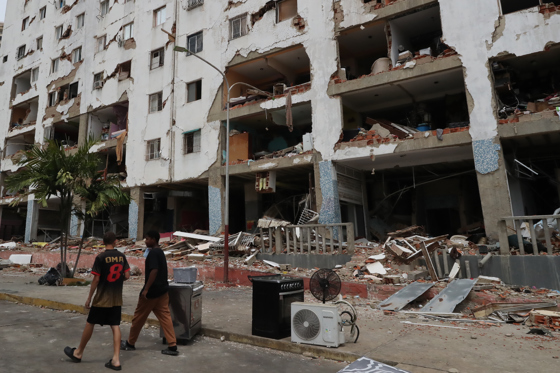
Venezuela is assessing infrastructure damage this Saturday while attempting to accelerate debris removal efforts ten days after the devastating earthquakes that left at least 2,645 dead, as the chances of rescuing survivors dwindle.
In La Guaira, the epicenter of the devastation and where severe telecommunications service disruptions persist, paving and bridge repair work continues, along with the evaluation of other road infrastructure, Transportation Minister Jacqueline Faría reported today.


The high-ranking official assured that Transportation Ministry personnel “remain deployed” and reported on paving work on a bridge in the Caraballeda sector (La Guaira), one of the areas most affected by the double earthquake.
According to Faría, they are “restoring road safety conditions to the infrastructure,” with “installing guardrails, paving, and maintaining expansion joints.”
While rescue operations are being scaled back given the slim chances of finding survivors under the rubble after ten days,

the families of buried victims are trying to keep hope alive and are demanding that the search be intensified in collapsed buildings, especially in the devastated coastal region of La Guaira (north, near Caracas), the area hardest hit by the 7.2 and 7.5 magnitude earthquakes of June 24.
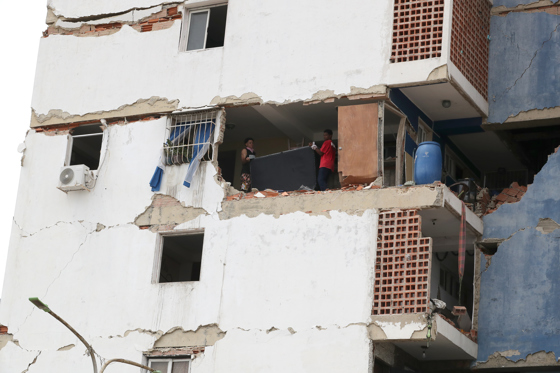
Meanwhile, many people, particularly in La Guaira, remain outside their homes this Saturday, many camping in public places, waiting for their houses to be inspected to determine the extent of the damage.
Authorities estimate that 15,050 people have been left homeless.


According to the latest tally, 885 buildings have been affected, 189 of them completely collapsed.
Venezuelan authorities met yesterday with the UN representative in the country, Gianluca Rampolla, to “evaluate comprehensive care plans and the coordination of temporary camps,” according to the president of the National Assembly, Jorge Rodríguez.
It is expected that in the afternoon, the brother of the interim president, Delcy Rodríguez, will update the figures, including the number of injured, which reached 12,666 on Friday.
The interim government’s economic team had planned to announce a series of measures to address the situation on Friday, but these announcements were ultimately not made.
The Ministry of Education announced Friday night that classes will resume next Monday, July 6, in unaffected areas, while remaining suspended in the sectors impacted by the earthquakes.
The Ministry also mandated the inclusion of risk management as a subject of study.
On Saturday, a Hercules aircraft departed from Uruguay for Venezuela, the first of several flights led by the Uruguayan Air Force to deliver more than 60 tons of humanitarian aid to the Caribbean nation.
The initial shipment comprises 15 tons, including more than seven and a half tons of medical supplies, over two tons of personal hygiene products, three and a half tons of powdered milk, and one and a half tons of rescue equipment such as mattresses and tents, among other items.