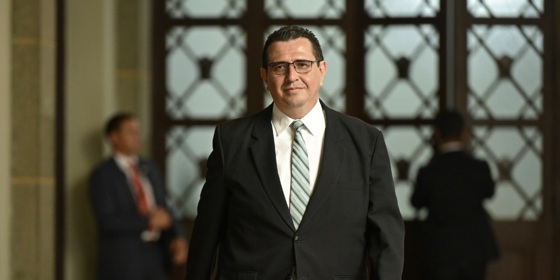
Guatemala’s President named Gabriel Estuardo García Luna as the new Attorney General in the Central American country!
Guatemala City, 5 May (EFE).-
Guatemala President Bernardo Arévalo de León on Tuesday selected lawyer Gabriel Estuardo García Luna as the country’s next attorney general and head of the Public Ministry for the 2026–2030 term, replacing Consuelo Porras Argueta, who has been sanctioned for corruption by the United States and the European Union.


The decision, which will shape the fight against corruption in the Central American country in the coming years, was announced by Arévalo in a national address in which he said he hopes “this will be the beginning of a new stage of justice” in Guatemala.

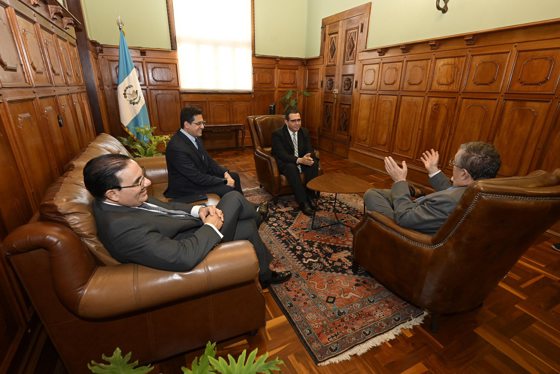
Arévalo chose García Luna from a shortlist of six candidates that also included Julio César Rivera Clavería, Néctor Guilebaldo de León, Beyla Estrada Barrientos, Carlos Alberto García Alvarado and César Augusto Ávila Aparicio.


“I have taken this decision guided by the conviction I have as president of the imperative need to have people of integrity at the head of our institutions,” the president said.
“The Public Ministry receives a new authority who does not arrive to serve a president, the government of the day, or particular or spurious political interests,” he added.
García Luna began his career in the Judicial Branch 29 years ago, in 1997, as a court clerk and secretary, later serving as a justice of the peace, a trial judge and an appellate court magistrate in criminal matters.


A graduate of the private Rafael Landívar University and a doctorate holder in law from the public University of San Carlos, his judicial profile is complemented by teaching experience at the undergraduate and graduate levels at both institutions.
He has also worked as an instructor at the Judicial Studies School in criminal law, served as president of the Judicial Discipline Board and acted as an adviser to the Office of the Attorney General.
“It is time to leave that past behind. I wish Dr. García Luna clarity, firmness and serenity to assume the responsibility he receives,” Arévalo said.

The incoming head of the Public Ministry will take office on May 17, replacing Porras, who served for eight years starting in 2018. Her tenure was marked by sanctions from the United States and the European Union, which accused her of undermining democracy by attempting to overturn the results of the 2023 elections, as well as by allegations of corruption in high-profile cases.
The final shortlist of six candidates was produced by a nominating commission, as required by Guatemalan law, from nearly 80 applicants. The process was criticized by civil society groups because it did not count judicial experience as valid, leading to the exclusion of several candidates.

Questions were also raised about the nominating commission after it awarded Porras the highest score of all applicants, even though her bid for reelection had been challenged over allegations that she plagiarized her doctoral thesis.
Several experts and civil society organizations had already warned that García Luna was the best option for the post.
Guatemala’s anti-corruption drive peaked between 2014 and 2018 under then-attorney general Thelma Aldana and the U.N.-backed International Commission Against Impunity in Guatemala (CICIG), which uncovered more than 100 cases of state bribery involving politicians and business leaders.
However, after Porras took office, a judicial crackdown began against anti-corruption prosecutors, journalists, lawyers and judges, most of whom were forced into exile. EFE
jcm/lds